Only running a bank is not enough. Customers now expect convenience and speed, so to move forward sustainably, companies need to consider banking app development. Banks have no choice but to find the balance between what they’ve used to and what tech has to offer. Read on to explore the reasons.
Why banking app development matters for the financial sector
In a world where smartphones replace wallets and visits to the branch are rare in between, banking apps define how customers experience your brand. A well-built app can turn daily transactions into lasting relationships, improving convenience for users and creating new growth opportunities for you.
Increase customer convenience
Chase Digital Banking Attitudes survey reports that 78% of consumers use mobile banking apps weekly, while 62% — “can’t live without them”. Tech-savvy millennials and Gen Z constitute a big part of that group. They like to solve their matters by themselves and do it quickly. Preferably online, without any unnecessary calls or waiting in line. Voice calls, too, are outdated, and so is visiting a banking branch office.
If you are still in doubt over the reasonability of developing a mobile banking application, you are missing out on a vast client pool.
Personalize banking services
Data. Data. Data. Today, everything is about the information you have about what your clients are and what they want. A mobile application allows you to collect and analyze information that your clients are putting into the application. What places do they visit? What stores do they go to?
Banks have access to clients’ credit traces – a powerful source of information that can provide numerous insights. By studying the clients’ buying habits, your banking specialists can develop multiple strategies and initiatives to attract and retain them. Moreover, it could also help to assist clients in tracking and working on improving their credit scores.
Lower operational costs
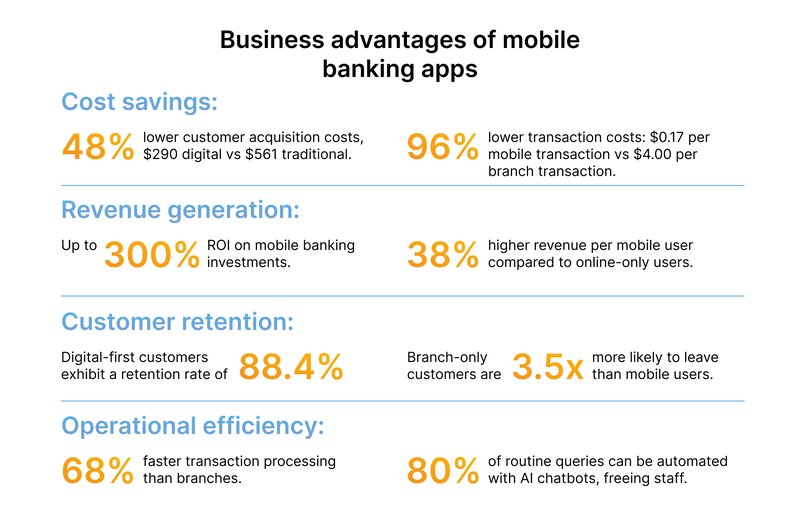
Moving the lion’s share of banking operations to mobile will kill two birds with one stone: increase efficiency and lower operating expenses. The mobile transaction costs two times lower as an on-site branch transaction.
By shifting even a small part of in-branch transactions to mobile channels, banks can cut costs associated with branch operations, including staff salaries, leases, and other overhead expenses.
It’ll allow banks to optimize branches, close the ones with poor performance, reassign the tellers to other divisions, and improve overall business efficiency.
Expand as a brand
Aside from offering customers an easy mobile banking application, banks can use the app to differentiate themselves from their competitors. By studying clients’ needs and habits, you can develop a genuinely brilliant customer-oriented application with a sprinkle of the bank’s brand persona.
Work out extra features for mobile banking that clients cannot experience in the office branch, like checking whether the pending transaction has been successfully confirmed or adding a bonus account that would save up from your retail partners.
How to create a banking app: 3 hints to follow
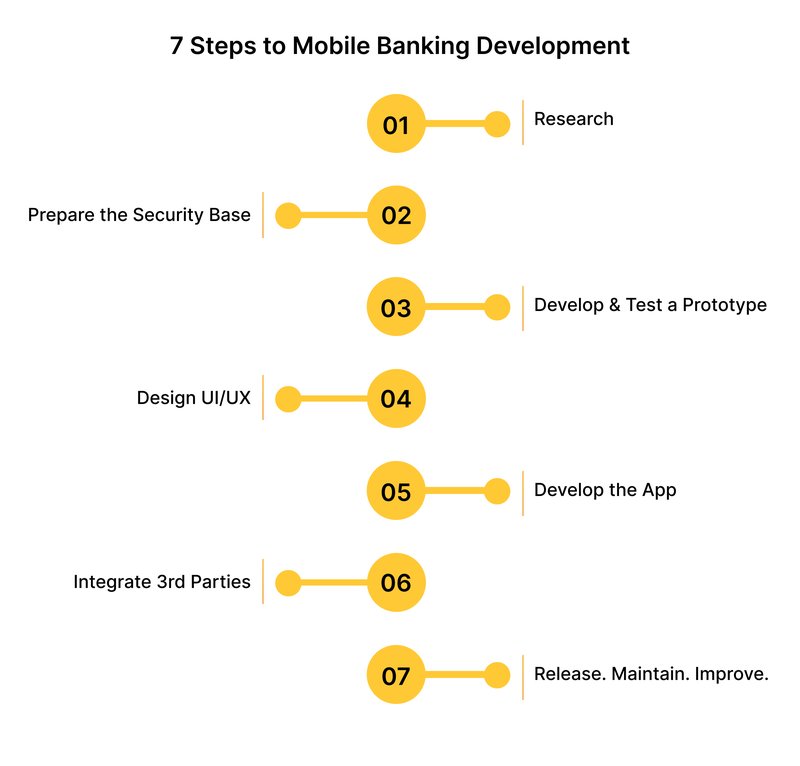
Any mobile application development process should begin with careful preparation and planning. Understanding what you want to achieve, who to contact, and what functionality is essential for the end user is necessary. Here are the three most important things that should be covered before you start banking app development.
Know your customer
Understand who you are developing this mobile banking app for. Look through several pieces of research and conduct interviews on how people use their mobile phones and what kind of apps they use, and check out the competitor’s apps.
At first, it may seem obvious that you are going to be dealing with tech-savvy millennials and Gen Z, who cannot go a day without a phone. However, you are in for a surprise: different sources suggest that about 30% to 40% of baby boomers use mobile banking. So you need to look at your customer segments to understand what features your app should have and how it needs to look.
Plan out the main functionality
After studying the people who are going to use your app, think about the necessary functionality it must have. It’s better to start small and fast than slow and complicated.
Listen to the clients. If everything they do is check their balance and transfer funds between cards, there is no need to do any extra. Start with several features and see how it works out.
Moreover, the more features the app has, the more it will cost.
Find a market-proven software developer
There are several factors to consider when choosing a mobile app development company for the upcoming project. Of course, you can always develop it in-house. But the cost of hiring and retaining your own technical specialists can become twice as much as outsourcing development, and then paying for app support and maintenance.
What to pay attention to when looking for a vendor:
- Location
- Rates
- Relevant expertise
- Solid cases portfolio
Best-in-class fintech apps: Success stories you should know about
The market is full of real-life success stories about cutting-edge apps that became game-changers in banking and fintech areas. How about diving into the details of products, Portmone and Bump, delivered by our team?
Portmone
Links: Google Play Store | App Store
Rating: 4.6 (Google Play Store); 4.8 (App Store)
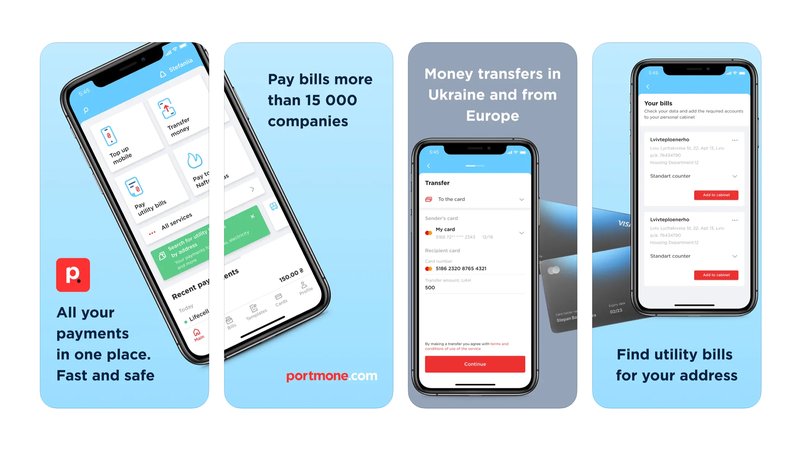
Description: Portmone is a solution for convenient payments that covers almost all types of transactions in Ukraine and abroad, from utility payments to private money transfers.
Here’s how it works:
The first step is to create a Portmone account and connect it to the user’s bank account, debit or credit card, or e-wallet. Users can add their expenses to Portmone’s platform and set up automatic payments for recurring bills, such as utility fees or rent. The application provides users with a dashboard to monitor their spending and resources. They can track their payment history, see their account balances, and set up budget goals to manage their finances better. Therefore, Portmone’s payment optimization and resource tracking features make it a useful tool for anyone looking to manage their finances efficiently.
Bump
Another bright example of our work is Bump all-in-one fintech platform for creators the team is currently working on.
Link: Bump
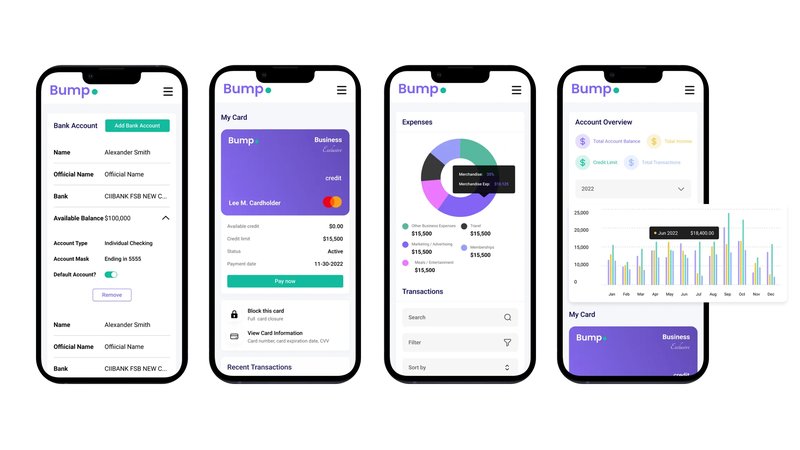
Description: Bump is an innovative financial platform that aims to help creators and freelancers make a living.
Here’s how it works:
Users have their personal accounts, helping integrate with banking accounts, store sensitive data, and access the app from any device effortlessly. With the Bump dashboard, users can monitor their spending habits in real-time, view details on upcoming payments and payment history, as well as set up automatic payments for bills or recurring expenses. To keep the payment process on track and ensure its security, the application sends relevant notifications and alerts.
Closing thoughts
From reducing operational costs to boosting retention, banking apps deliver measurable returns. But behind every successful app is a team that knows how to merge regulatory compliance, design, and innovation into one seamless product.