Healthcare mobile app development: Guide & examples

For startups and enterprises alike, investing in healthcare mobile app development is no longer an experimental move — it’s a proven business opportunity driven by user demand, digital healthcare adoption, and long-term market growth. In this guide, we explore healthcare mobile app types, real-world examples, development process, and costs to help you evaluate whether building a healthcare mobile application is the right step for your business.
What is a healthcare mobile app?
A healthcare mobile app is a digital application built for mobile devices that supports health-related activities, wellness management, and healthcare operations. These apps help users improve their health and well-being by providing access to educational content, encouraging healthy habits, enabling self-monitoring, or automating administrative and communication processes within healthcare environments.
Healthcare mobile app development refers to the end-to-end process of planning, designing, building, and maintaining such applications. It typically begins with market and user research, continues through UX/UI design and development, and includes testing, regulatory considerations, and deployment to app stores, followed by ongoing updates and support.
Common examples of healthcare mobile apps include:
- Medical reference and dictionary apps
- Sleep tracking and monitoring apps
- Fitness and wellness apps
- Nutrition and diet management apps
- Smartphone-based cardiograph and health monitoring tools
- Doctor appointment scheduling and reminder apps
- Nursing and healthcare job board apps
- Healthcare accounting and administrative software
Healthcare apps vs. medical apps: Сompliance perspective
Healthcare apps and medical apps serve different purposes and are subject to different regulatory expectations.
According to FDA guidelines, medical apps are applications that transform a mobile device into a regulated medical device or support clinical decision-making for diagnosis and treatment. These apps are typically used by healthcare professionals and, in some cases, by patients under medical supervision, and they may require formal regulatory approval.
Healthcare apps, on the other hand, are generally intended for a broader audience. They focus on education, prevention, wellness, and operational efficiency rather than direct diagnosis or treatment. While they still need to follow data protection and privacy regulations such as HIPAA or GDPR, they usually fall outside strict medical device regulation.
Healthcare mobile app development as a business idea
The exploding number of available healthcare apps is surely a win for healthcare software development as a business idea.
Just like with other software development projects, we need to take a look at our market and target audience.
Here are a few stats you need to know: As of April 2023, there were 54,000+ healthcare apps available on Google Play Store. As you can see below, it’s a small decrease compared to Q4 of 2021, the global crisis slowed down the growth.
The U.S.mHealth apps market was estimated at ~$37.5B in 2024 and projected to grow to ~$86.37B by 2030 (~14.8%% CAGR).
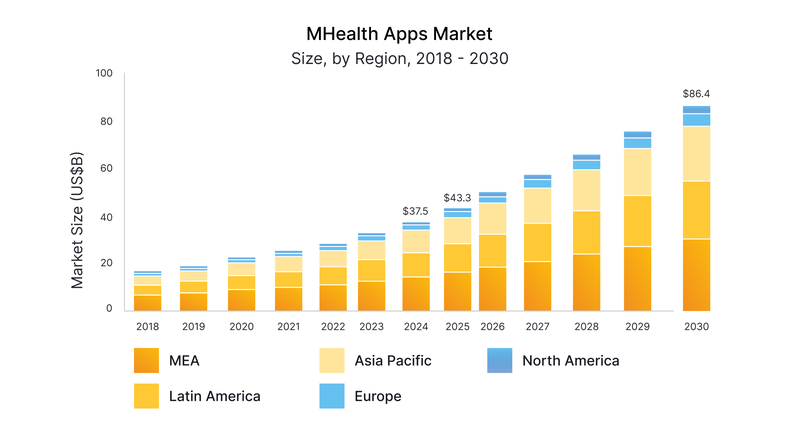
Source: grandviewresearch.com
These two stats show us that the market is growing, slowly but surely.
Here are more figures to back this up:
- Over 84 million U.S. people use health and fitness apps [source]
- $270 million is the global consumer spending for mental wellness apps [source]
- Recent survey reporting shows meaningful patient preference for apps and portals [source]
- Over 61% of smartphone owners in the U.S. have used them to get health-related information
- $209 million is the gross revenue generated by health and fitness apps in the U.S. [source]
All these impressive numbers suggest one thing: investing in app development for healthcare is indeed an idea worth exploring.
What are the types of healthcare mobile apps?
The most common types of healthcare mobile apps are:
- Medication reminders & info
- Lifestyle & stress management
- Diet & nutrition management
- Women’s health and pregnancy
- Healthcare insurance
- Doctor on demand apps
- Medical records apps
- Medicine delivery apps
- Hospital process automation
All healthcare mobile apps fall into a few categories:
- Health condition management
- Wellness management
- Apps for hospital management
Examples of successful healthcare mobile apps
As you can imagine, there are lots of popular and successful mobile apps in the healthcare industry.
Here are our picks of the top healthcare mobile apps.
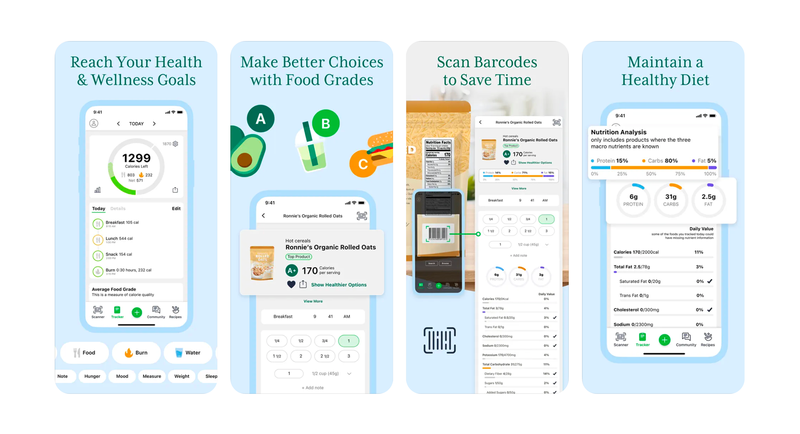
1. Fooducate
Source: App Store
Type: Calorie counter
Downloads: 1+ million (Google Play Store)
Pricing: Free subscription available; Premium: from $4.99/yr to $74.99/yr.
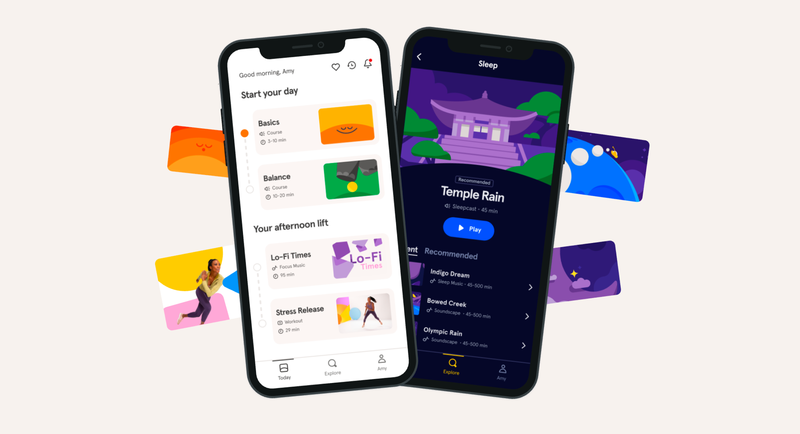
2. Headspace
Source: App Store
Type: Meditation app
Downloads: 10+ million (Google Play Store)
Pricing: Free plan; Premium: $12.99/yr to $69.99/yr
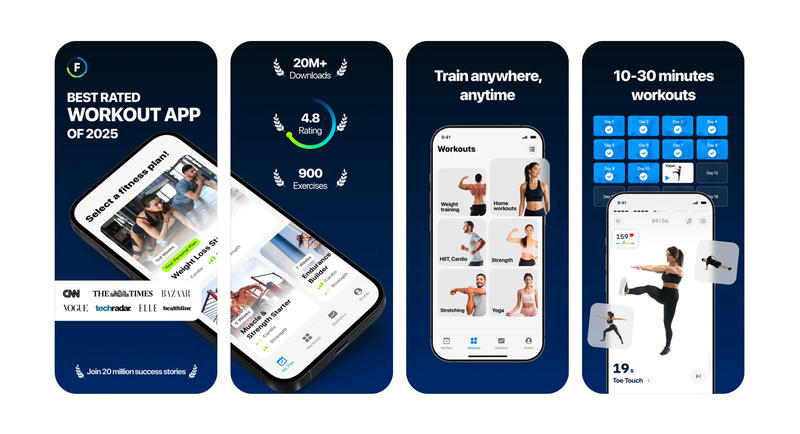
3. Fitify
Source: App Store
Type: Fitness
Downloads: 10+ million (Google Play Store)
Pricing: Free plan; Premium: $77/yr
4. MyTherapy Pill Reminder
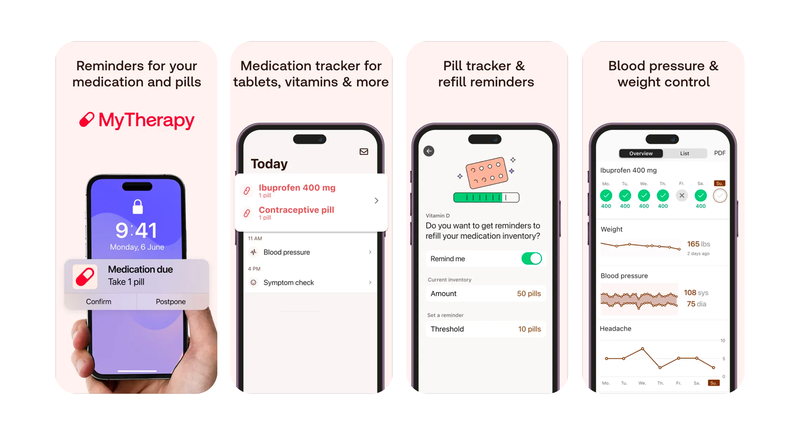
Source: App Store
Type: Medication reminder
Downloads: 5+ million (Google Play Store)
Pricing: Free plan; In-app purchases available
5. Doctor Anywhere
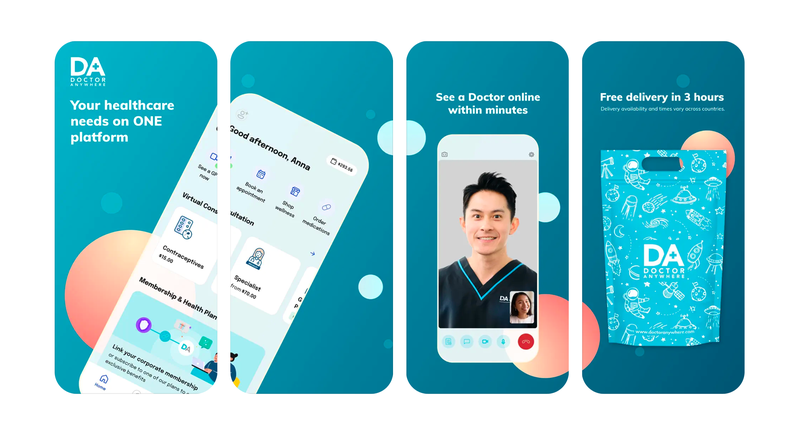
Source: App Store
Type: Doctor on-demand app
Downloads: 1+ million (Google Play Store)
Pricing: Free plan; In-app purchases available
Health mobile app development success story: Dare
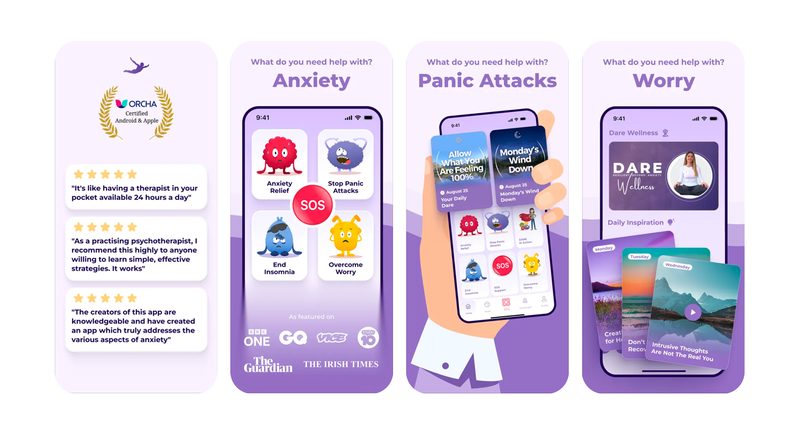
Source: App Store
Let’s look at this example of app development for healthcare in more detail.
Dare is an app that our developers at Globaldev Group created:
App name: Dare
Links: Google Play Store | App Store
Rating: 4.9 (App Store); 4.7 (Google Play Store)
Description: Dare is an app that people can use to learn simple and effective strategies to relieve anxiety and panic attacks.
Here’s how it works:
First, users choose what they’re struggling with (here are the problems they can select):
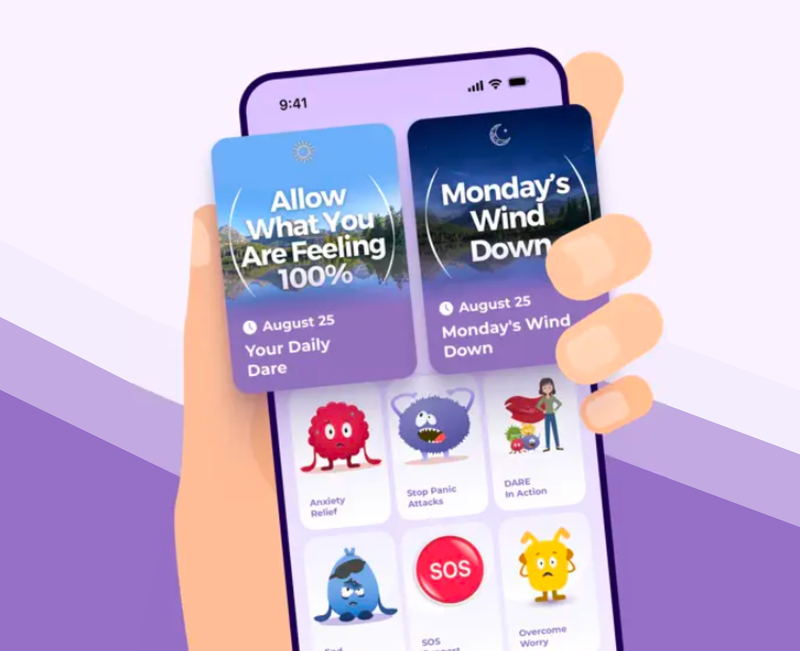
Source: App Store
Then, they get many useful resources (audio and video) to help them relax. For example, they can get audio with a therapist telling them in a calm voice how to relieve anxiety. Downloading audio and videos is possible, too, and is helpful to have access to them at all times.
There are also some helpful features for crisis situations. For example, you can use the app to de-escalate a panic attack by following a series of steps, also narrated by a calm, soothing voice
Many of Dare’s features are free, but there’s also a paid version with extra resources.
How to develop a healthcare mobile app: the process
Here are seven key steps of healthcare mobile app development:
- Study your market
- Learn about target users
- Decide on the app type and features
- Hire a team of developers
- Create an app design
- Deliver an MVP
Now, let’s look at these in more detail.
1. Study your market
You can save tons of money and time by studying your market and validating your idea first—before committing to anything.
Market research for a healthcare mobile app should answer these questions:
- What’s the goal of the app?
- Does the goal meet a real need on the market?
- Are you going to be targeting a wide user base or a more niche one?
- Who are the most successful competitors?
- Will your app have any unique differentiators from the competitors?
- What external factors can interfere with your healthcare app development?
To answer these questions, you have a few ways to go. You can explore reputable websites like Pew Research Center and conduct surveys and interviews.
For example, these are the main health and well-being goals that are on the minds of your potential users right now.
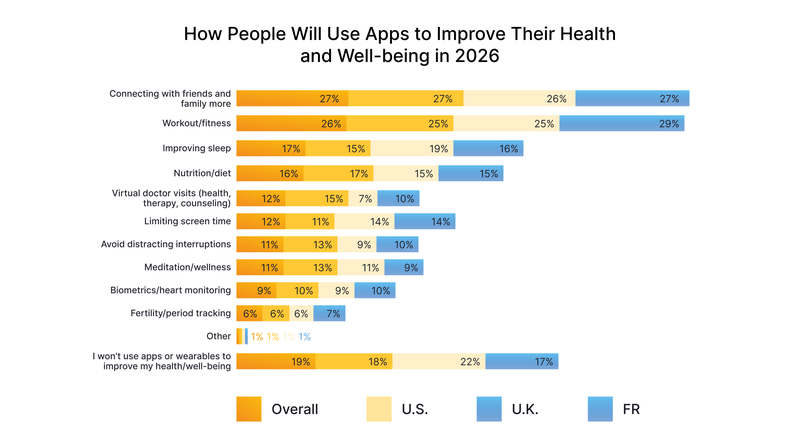
Next, you can check out competitors’ apps and do a SWOT analysis.
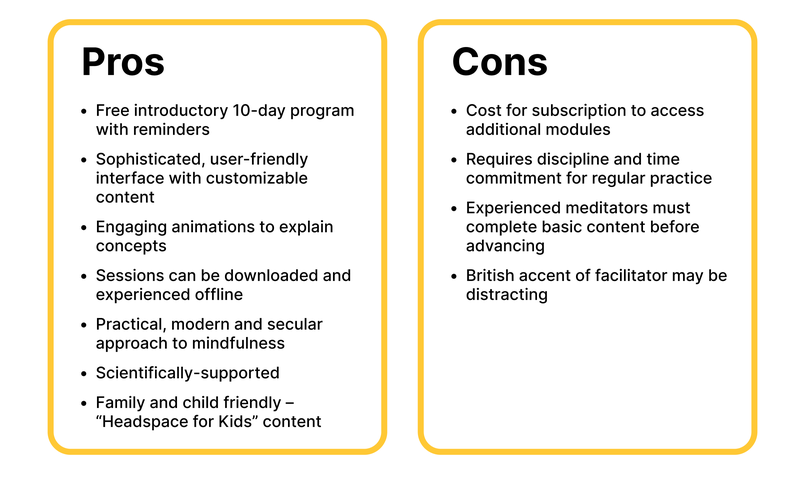
If you’d like to develop a guided meditation app, for example, you should check out professional reviews of your competitors from psychologists (because they often mention the shortcomings, too).
Example: These are the pros and cons of Headspace (a popular meditation app) from Dr. Nancy A. Haug, a Professor of psychology:
Get more info about market research:
2. Learn about target users
The goal of this step is to have a clear definition of your healthcare app’s market.
Let me explain what I mean by “clear” with an example. If we stick to the guided meditation example, this is what the basic definition could look like:
“Our target audience is people:
- of all ages looking to improve sleep and relieve stress
- who want to begin exploring meditation and mindfulness for the first time
- who have time only for short (about 15 mins) single-session meditations a day
- who are looking for ideas to apply mindfulness in their everyday activities to improve their work performance.”
In addition to this definition, the profile of the target user of your healthcare mobile app could also include such points as location, occupation, hobbies, level of education, and income.
For example, CollaborateMD, which helps healthcare businesses improve patient care and revenue, targets people who require appointment reminders (among other things). Therefore, they market themselves as an organization and practice management solution.
3. Decide on the app type and features
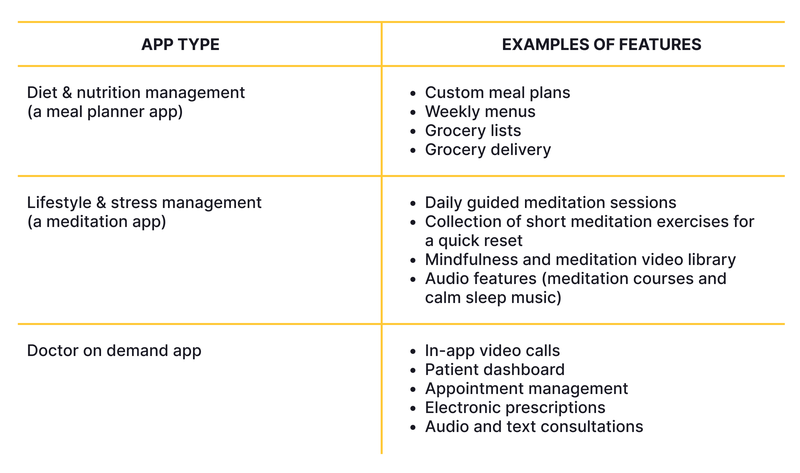
There are so many types of healthcare mobile apps you can develop. We mentioned many of them earlier in this post, but let’s list some of them once again here. Also, let’s add the most important features to give you a better idea:
4. Hire a team of developers
At this point, you just need app developers. One way to begin the healthcare mobile app development process is to hire a dedicated software development team.
Hiring a dedicated team simply means outsourcing the development tasks to developers overseas. The big advantage is the cost reduction—in some cases, hiring this way could be up to 70% less expensive compared to the cost of developers in the U.S.
Outsourcing partners also take care of things like:
- Finding developers. You get a custom team with all the expertise and experience needed for your healthcare mobile app project
- Infrastructure expenses. Your vendor will take care of the IT infrastructure so you can focus on the business side of the project
- Regular reporting and monitoring. You’ll be presented with all the info on your healthcare application development progress on a regular basis
And the best thing about outsourcing healthcare software development is that you manage everything with a software development project manager, who’ll be your sidekick, taking care of the processes and reporting to you.
5. Create an app design
Now that you have a team, it’s time to move on to creating the initial design of your healthcare mobile app based on your vision.
“The initial design” here means creating the visual interface of the application: screens, buttons, colors, and other things related to the user experience. In other words, you’re creating a prototype to be tested to ensure that it meets the needs of the target users.
The designs can be very basic (like below)—the main idea at this point is to create the prototype and test it until you approve the final version.
6. Deliver an MVP
MVP stands for “Minimum Viable Product” and is a version of your healthcare app with essential features. Creating MVP is very important because it’s the first stable app you can take out in the field and test together with real users.
Here’s what you need to know about this stage:
- The average time to develop an MVP is between three to six months. This timeframe is much shorter compared to end-to-end software development (which could take longer than 12 months).
- You’ll be able to align your business hypotheses with real users’ needs. The MVP is a usable product, so you can deploy it with real users and have them explore and provide their feedback on everything.
- Better chance to develop a top-grossing healthcare app. Entering the market with an app that meets the real needs of users gives you a great chance to make your healthcare startup a success.
How much does healthcare mobile application development cost?
You may have heard this before: the cost of developing a top-quality healthcare mobile app depends on a few factors.
That’s a bit vague, but also true.
To get a good estimate, you’ll need to add the cost of these factors:
- Type of healthcare mobile app
- The number (and nature) of features
- Compensation for the development team
- Technology you’ll use to build your healthcare app
- Certification and compliance with laws and regulations
But let is give you a few examples.
Here are some approximate costs of popular healthcare applications:
- Meditation app: $25,000+
- Doctor on demand app: $40,000+
- Hospital management app: $200,000+
In our experience, you can build an app like Headspace for anywhere between $25,000 and $150,000. Again, the final amount depends on the features; for example, adding a video chat functionality alone can cost up to $10,000.
If you’re wondering if the cost of health mobile app development is worth it, let me just say that Headspace brings anywhere between $50M and $80M in revenue annually.
Conclusion
Healthcare mobile app development is no longer a question of if — it’s a question of how well. As digital health adoption continues to grow across iOS and Android platforms, businesses that invest in thoughtfully designed, scalable healthcare apps are positioning themselves for long-term relevance in an increasingly competitive market.
At Globaldev, we approach healthcare mobile app development as more than just building an application. We combine deep technical expertise, product thinking, and regulatory awareness to create solutions that align with real user needs, business objectives, and industry standards.
Whether you’re launching a new healthcare product or modernizing an existing one, success depends on making the right architectural, design, and development decisions from the start.
This guide is designed to help you navigate those decisions with clarity and confidence. If you’re exploring a healthcare mobile app idea or evaluating the next step for your product, our team is always ready to share practical insights and help you assess what’s technically and strategically possible.