Well-designed logistics applications help companies streamline workflows, reduce operational costs, and improve visibility across the entire supply chain. In this article, we explore essential modules of logistics mobile applications and review popular solutions used to support modern logistics and supply chain management.
What are the must-have modules of a mobile logistics app?
1. Daily log
It is a module for collecting information on the driver’s daily log with the help of the next features:
- Driver’s personal information;
- Plate number and model of the vehicle;
- Hours of work;
- Passed mileage;
- Detailed cargo description.
The application automates the management process and improves the efficiency of operating the fleet by providing information on the vehicle’s whereabouts, the mileage it has passed, and the approximate time of arrival to the place of destination. Managers can check drivers’ logs to monitor if there is anyone working out of service hours and control the state of the vehicle in accordance with drivers’ reports.
2. Location tracking
This module is designed to receive and transmit the information on the vehicle’s location. Usually, it is tracked either by utilizing satellite signals through GPS or by means of cellular connection. Normally the app would use the information from both of these options, as tracking location through cellular data heavily relies on the network coverage and is not always available.
Cellular data tracking is great in urban areas. There are many cell towers to keep the device connected and send coordinates of the vehicle’s whereabouts to the server. However, when the network is not available, the data is stored in the internal phone memory and will be transmitted to the server only after the connection is restored.
Satellite tracking, on the contrary, is supported by the GPS module. GPS tracker receives the information about the vehicle’s exact location and transfers it to the server through a satellite modem or any available network connection (cellular or Wi-Fi). The application can use the data from the one that is already on the driver’s smartphone or the one that is connected to the application through Bluetooth. Find out more about methods of location tracking in our article:
This module is designed to help you optimize the cargo for delivery. In case if there is a shipment that should be loaded and delivered in a limited amount of time, the manager can check the base and assign the driver whose vehicle has not reached its load limit and happens to be near the cargo.
If the driver has been found, the manager will assign the task to him over the admin panel, and the driver will get informed about the new task with a push notification.
3. Cargo tracking
Apart from tracking the vehicles and loading units, logistics companies have to supervise their cargo. Therefore, this module is designed to give proper information on which item is in which van.
There are two ways to implement the system for inventory management:
- QR-Code
- RFDI or NFT technologies
You can either use a distinct QR-code for each item, which may be scanned with a cellphone’s camera through an app, or another special scanner. Alternatively, you may apply radio frequency identification (RFID) or near-field communication (NFT) technologies.
RFID tremendously increases the speed of processing and scanning units compared to traditional code scanning. As it uses radio waves for detecting and identifying the object. It consists of a scanner and a tag with an embedded chip and antenna.
These tags can be active and passive. Passive tags can be detected within 25 meters, while for active tags the distance can reach up to 100 meters. The logistics industry prefers using active tags, of course. While NFC applies the same principles, it differs in the distance that makes scanning possible.
NFC tags should be positioned close to the scanner, so it is not possible to scan all objects at once from the parking lot. The employee will have to check every truck and every item. The scanned data hidden within the tags will contain information about cargo carrier, tracking, the receiver of the package, and time when it was delivered. This way, the company will be able to avoid losing or delivering the wrong package.
4. Information on driver’s behavior
This module is meant for collecting information about the driver’s behavior on the road through the GPS. Not only does it allow us to track the precise location of the fleet member, but also to receive information about the driving speed, engine start-up and shut-down times, and transmit the data to the manager.
Any cases of speeding, irrational driving, or injury crashes will be reported. The collected data can be used for developing and enforcing a driving policy of the enterprise to avoid unwanted driving behavior and regulate any violations. It will encourage employees to work more effectively and avoid using company trucks for personal use.
5. Vehicle inspection
Here will be stored the information on the state of the vehicle and defects revealed after it was in use. The application will keep records of the vehicle’s body integrity check, the state of the undercarriage, brake system, and engine compartment.
The manager will be able to revise the results of the inspection and schedule the necessary repairs. It will eliminate the possibility of a sudden break-down or accident that may occur due to some parts giving away.
TOP 10 logistics and supply chain applications
A dedicated mobile app for logistics companies acts as a real business and life saver when it comes to operating in the modern harsh market conditions. Here are the TOP logistics and supply chain applications available right now in our opinion.
1. EazyStock
Source: YouTube
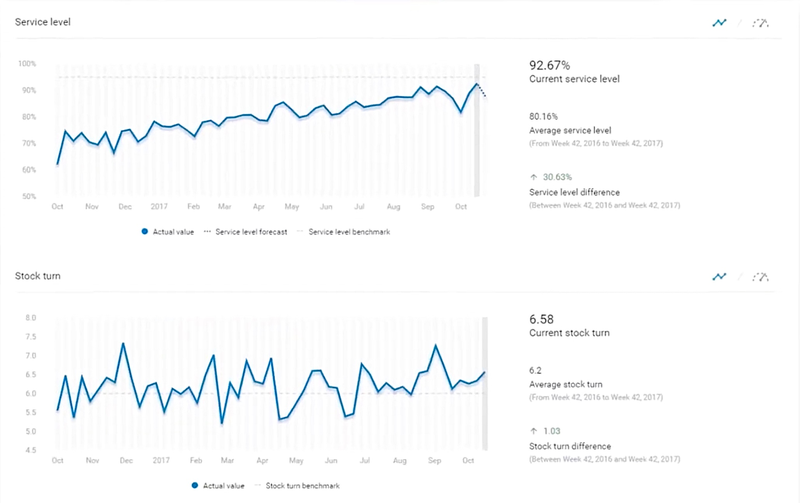
Got an extensive, dynamic inventory to constantly manage and optimize along the ongoing workflow? EazyStock is a convenient cloud-based solution just for such purposes that can be integrated with any type of ERP you are using at the moment. The solution has all the optimization and even forecasting features one may need to run inventory logistics most efficiently.
2. OmniFocus
Source: omnigroup.com
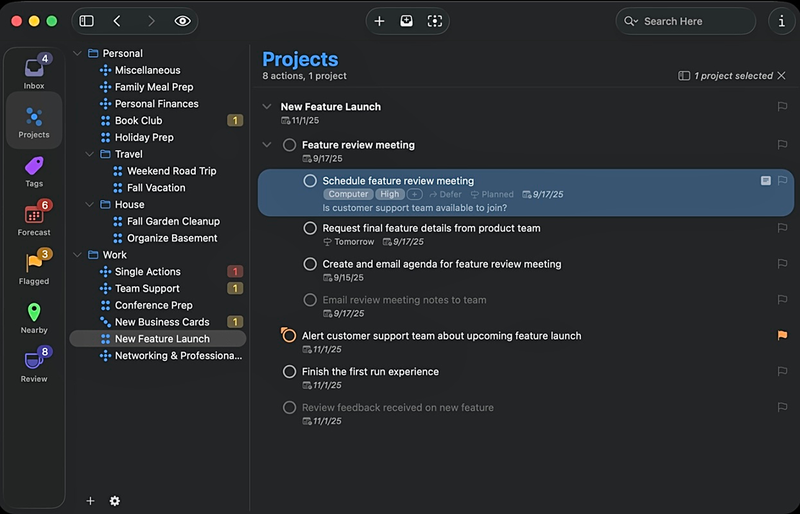
This one may as well be the iOS-exclusive best logistics app for flexible task management. The solution boasts an interface built with taste, great intuitive design to work with via iPhone, iPad, or MacBook, and plenty of workflow-optimizing space. Its Apple exclusivity can be considered the app’s only downside. However, when it comes to brand recognition and status, “i devices” are the most trendy solutions to employ in business.
3. Logistimo Plus
Source: logistimo.com
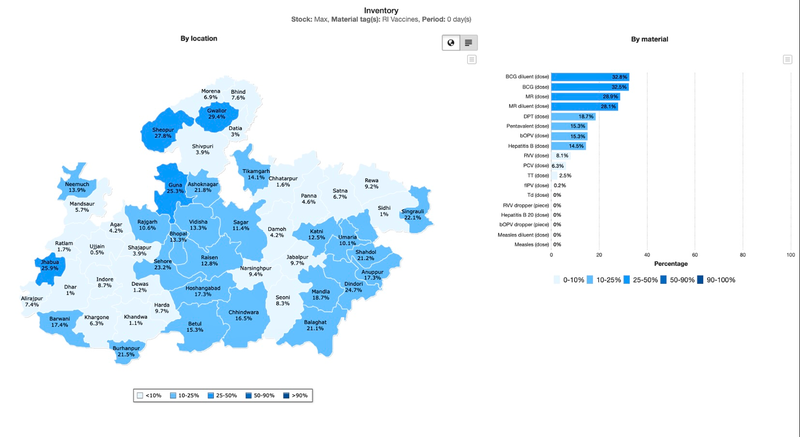
This here is a full-on global supply chain and logistics system that covers the underlying aspects of such business far and wide. From order processing, inventory management, and transportation planning to supply chain automation, performance analysis, and partnership making features – Logistimo can be deemed a true mastodon among apps of this kind. It works offline, too.
4. Hawk-Eye Trucking Log Book
Source: Hawk Eye Trucking Log Book
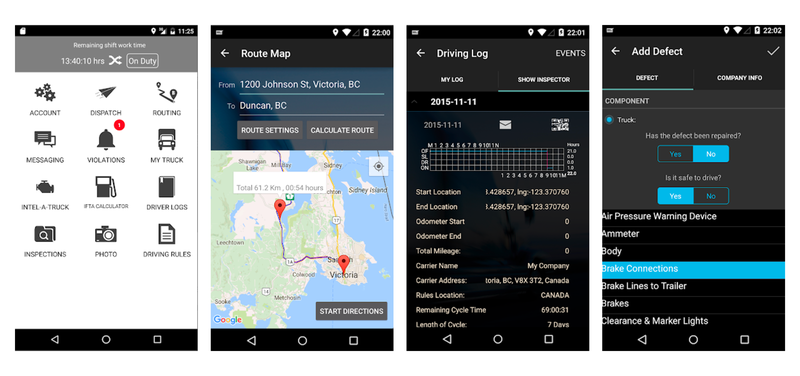
Need an intuitive system interface to aid and control your hired drivers’ performance? Hawk Eye offers a well-tried-and-tested solution focused on such particular needs. Namely, the app provides stable GPS tracking opportunities via an interface equipped with interactive maps, live monitoring, fleet performance reports, smart routing, and more.
5. Mobile SCM
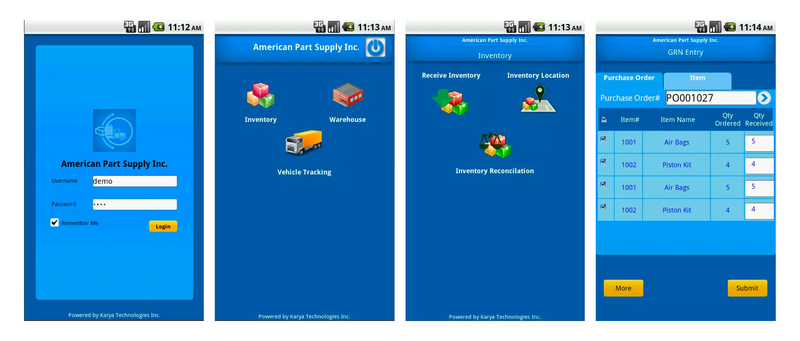
Source: apkpure.com
When it comes to trucking and logistics app development, savvy solutions providers focus on delivering vast cost-saving, business-optimizing capabilities through a simple, easy-to-grasp interface. And the creators of Mobile SCM seem to have achieved just that, offering an utterly intuitive app that helps cut costs with affordable supply chain monitoring to help you boost the ROI.
6. Scandit
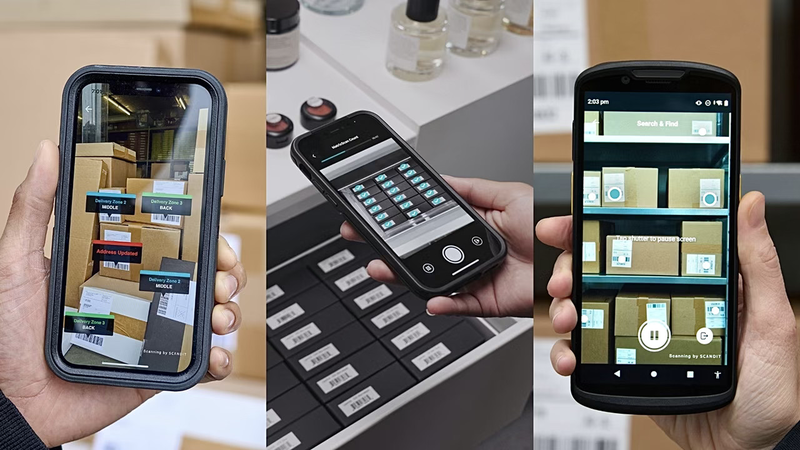
Source: scandit.com
Scandit is a fast and easy-to-use app for barcode scanning. In terms of logistics and supply chain organization, you can use it in the enterprise to enable employees to easily cope with registering items in the inventory. This “small gear in the big system” will be one of the major aspects of speeding up the whole business performance.
7. AscendTMS
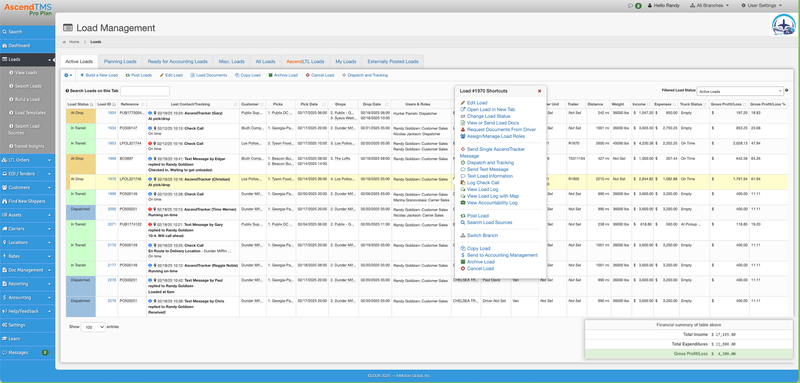
Source: thefreetms.com
A transport management system (TMS) offering tools for dispatching, load planning, accounting, and fleet coordination through a centralized interface. It helps reduce manual tasks and provides operational visibility.
8. BooksyBiz
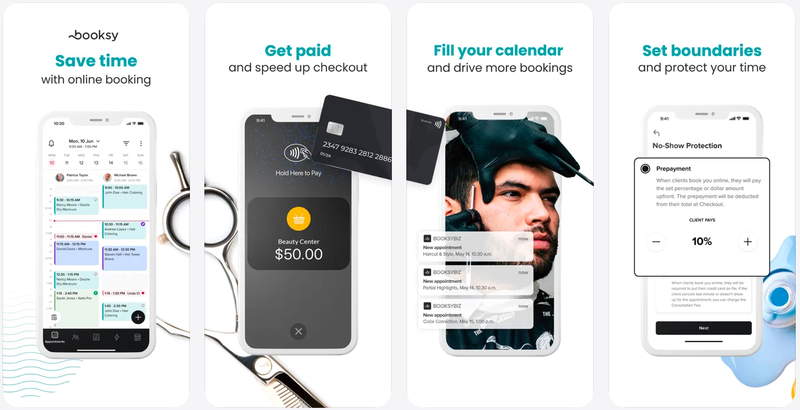
Source: App Store
At a measly $29.99, you get a universal business appointment booking tool where you can organize an individual appointment calendar. Clients can book a meeting choosing the most fitting date and time without having to call you up and specify any details. There are also marketing and customer loyalty tools, as well as social media and email integrations.
9. Tookan
Source: jungleworks.com
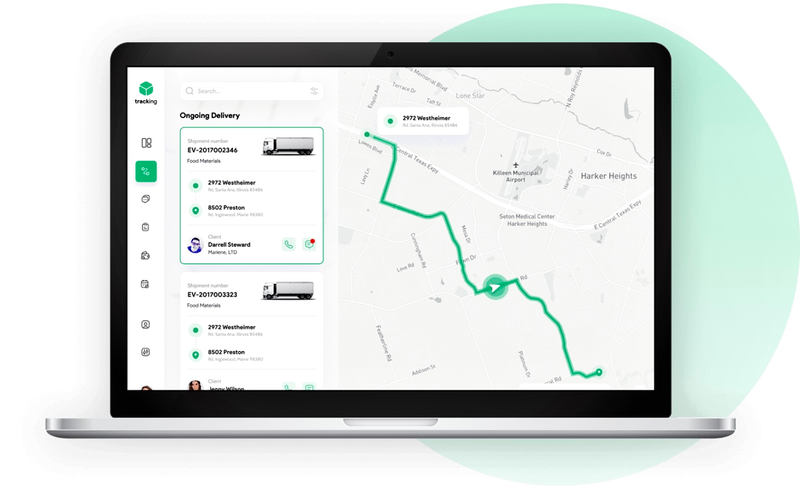
A delivery and dispatch management platform that supports real-time order tracking, dispatcher communication, and fleet coordination — useful for businesses handling last-mile logistics and on-demand deliveries.
10. GasBuddy
Source: App Store
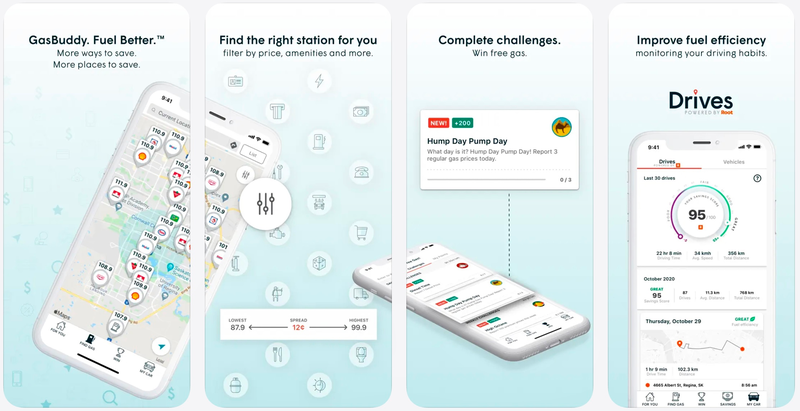
The main goal of GasBuddy is as simple as it is efficient and relevant – checking gas prices in the required vicinity and finding the most optimal or the cheapest options for your logistics. With all the pricing info gathered in a single interface, you may save a lot on the proper choice of the most cost-efficient gas stations on particular routes.
Conclusion
Modern logistics and supply chain management depends on accurate data, coordinated workflows, and real-time visibility. Mobile applications that combine tracking, reporting, and operational control into a single system help companies manage fleets more effectively and respond faster to disruptions.
By selecting the right set of application modules and integrating them into daily operations, logistics providers can improve efficiency, enhance customer satisfaction, and maintain better control over costs. A structured, mobile-first approach to logistics software supports scalable and predictable supply chain performance.