What is a DevOps engineer? Roles, responsibilities, and importance

To achieve their goals, DevOps engineers must have excellent communication skills and an understanding of code. Communication is required to foster a collaborative environment, while coding knowledge is necessary to make occasional code changes.
In this post, we’re discussing everything about DevOps engineers: their roles, responsibilities, skills, and importance.
What is a DevOps engineer?
A DevOps engineer is an IT professional responsible for involving software developers (Dev) and IT operations (Ops) in one product lifecycle (DevOps). This lifecycle minimizes the time needed to deploy, test, and release software, thus improving the company’s ability to deliver high-quality software projects faster.
The DevOps strategy does several things differently compared to the traditional approach. For example, it commands to produce smaller parts of software instead of large chunks, which speeds up the integration, testing, delivery, and quality.
Result: 84% of developers following the strategy say they “release software faster than ever before”. 57% also report their releases are twice as fast.
This video has more details about how DevOps speeds up software delivery.
What are the DevOps engineer roles in software development teams?
Today, 83% of IT companies are implementing DevOps practices. DevOps engineers are leading the change with a wide-ranging knowledge of both software development and IT operations, including coding, testing, access & infrastructure management, deployment, risk analysis, and others.
DevOps engineer roles and responsibilities vary from one company to another. But the main ones include the following.
Improve collaboration between developers and IT staff
On conventional teams, software developers (folks who create the code) and IT operations staff (folks who deploy IT systems and maintain infrastructure) have conflicting interests and often “don’t get along”.
Two problems cause this outcome: siloed responsibility and opposing goals. Developers may not know infrastructure requirements and code support, so they give the code to IT operations for deployment. If issues arise, IT often assumes that poor code quality is the reason.
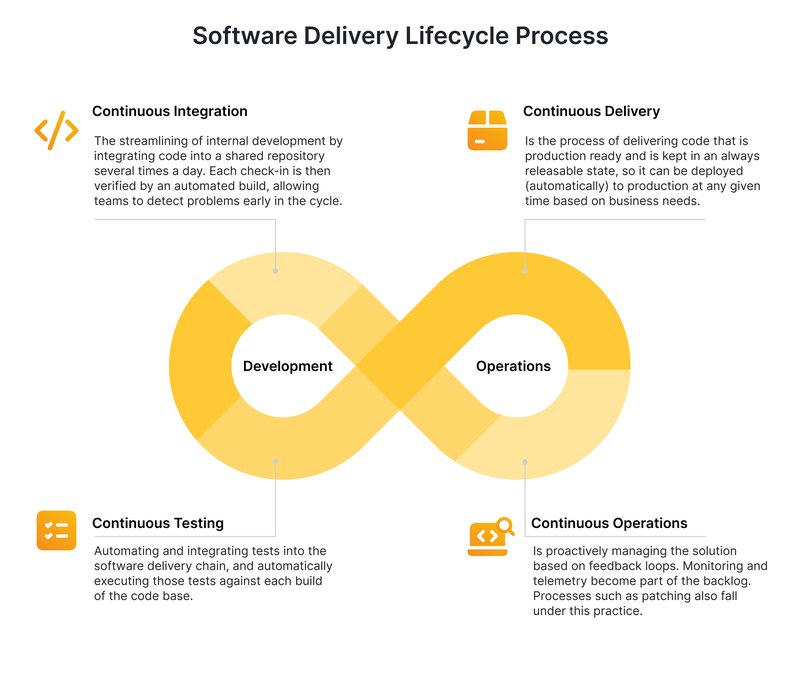
That’s why bringing developers and IT operations together is a great responsibility of DevOps engineers. To achieve this goal, they implement four DevOps practices: Continuous Integration (CI), Continuous Delivery (CD), Continuous Testing (CT), and Continuous Operations (CO), which make up the CI/CD pipeline.
Here’s how these four practices transform the software delivery process.
Manage automated software delivery processes (CI/CD pipeline)
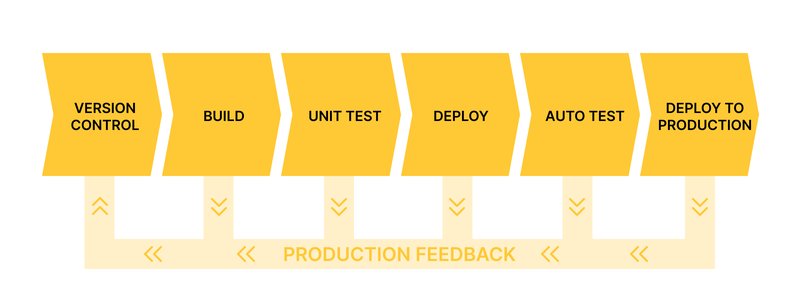
Creating and managing the entire CI/CD pipeline is the primary responsibility of DevOps engineers. This means they design every step that must be completed to deliver a new version of software (planning, developing, testing, deploying, etc.)
As the project starts, DevOps engineers will also find ways to optimize the pipeline to speed up the time to market without sacrificing the quality. For example, they recommend conducting various tests during development to ensure continuous quality assurance.
Oversee code releases
Conducting regular checks to ensure quality code is an essential responsibility of DevOps engineers. This way, they discover issues or confirm that the code meets the client’s quality standards.
Unlike the traditional approach, DevOps release management includes planning, scheduling, and controlling software product development and delivery. Throughout this process, DevOps engineers work together with developers from the beginning to the end, achieving faster feedback loops and releases.
Help with project management
DevOps also has project management skills to foster a factorable environment for developing and improving the software product. They’re responsible for analyzing the needs and technical requirements of clients at the beginning of software projects.
Also, they work alongside project managers to help them create project plans. Specifically, they’re involved in risk assessment, cost and benefit analysis, product feature analysis, resource planning, and timeline projections.
Mentoring and supporting team members
DevOps engineers are also tasked with mentoring and training software developers, testers, and other team members. It’s a part of the proper implementation of the DevOps culture, which ensures collaboration and issue resolution.
Also, team members come to DevOps engineers for help with eliminating process bottlenecks and issues preventing them from doing their job properly. Since this position is part of planning work processes, DevOps experts have a deep expertise in the best practices, which gives them a good opportunity to support the team.
Provide incident response and management
Security is a major consideration in software development, so it’s only natural that DevOps engineers are involved in these processes. Besides working with testers on security automation projects, they collect data and metrics to develop better security incident responses.
Another major DevOps engineer role is to create a culture of blameless, open communication between the software development team members. This culture is essential to ensuring quick incident detection and effective resolution.
Approach of our DevOps engineers to software projects
For us, DevOps is a culture of working where teamwork, shared responsibility, system thinking, and communication are embraced as keys to success.
This culture translates into tangible benefits for you as a client. Every project you entrust to Globaldev includes DevOps engineers who are not only technical experts but also collaborators, facilitators, and problem-solvers. Their mission is to deliver your product faster, safer, and with fewer surprises along the way.
This person will:
- Collaborate with you and the team to understand your business and technical requirements
- Translate those needs into a streamlined, automated delivery process
- Set up and manage the CI/CD pipeline for faster, more reliable releases
- Integrate security practices across the development lifecycle
- Monitor system performance and resolve issues before they impact users
- Manage infrastructure, networks, and databases with minimal downtime
- Document configurations and workflows for transparency and future scaling
The outcome is a smoother, faster, and more resilient software development process built to scale with your business.
Where do you go from here?
Behind every fast, secure, and scalable software product is a DevOps engineer making sure all the moving parts work in sync. From bridging communication gaps to automating complex delivery pipelines, their role is essential to keeping development on track and aligned with your goals.
At Globaldev, our end-to-end DevOps services are built to help you handle system load challenges with confidence. Whether you’re scaling, optimizing performance, unifying fragmented systems, or transforming your infrastructure — we’ve got the experience and the tools to make it happen.
Let’s talk about how our DevOps team can support your next stage of growth.