eCommerce software development: Paving the way for digital transformation

Read on to explore what to expect from online shopping and what steps to take to create cutting-edge eCommerce technology products.
Staying ahead of the curve: Essential eCommerce software development trends to watch
To be competitive, businesses must embrace the technology driving the next phase of digital retail. Let's take a look at the top eCommerce software development trends shaping the market right now.
Composable architecture
More and more big fish in the eCommerce business strive to break their monolithic architecture and decouple the frontend from the backend. This phenomenon has a weird name, “headless”. Despite its obvious complexity, it helps web stores work on the shopping experience and improve the backend part without any dependencies. Well, it’s an excellent point for ecommerce since it can retain customers and enhance the offering step-by-step.
Meantime, composable architecture is a broader category allowing companies to compose various ready-to-use solutions from well-known vendors and create a custom-like stack from proven SaaS. This approach delivers the flexibility desired, drives dev velocity, and helps scale up effortlessly.
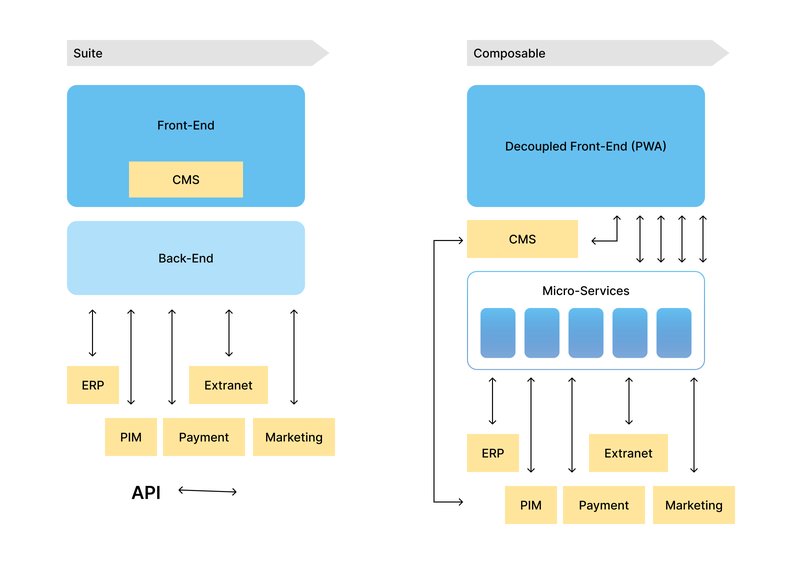
Composable architecture is also possible with custom eCommerce software development of a frontend platform, CMS, or other components. If you have a robust product for modernization, there’s no need to jump to an entirely new tool. You can go composable in any case. Your desire and relevant business conditions are all you need.
AI & ML
Did you see what modern web stores are capable of? They deliver smooth and stellar shopping experiences to shoppers, and technologies like artificial intelligence (AI) and machine learning (ML) are their allies in this process.
In the years to come, we can expect to see even more eCommerce platforms using AI to analyze customer data and offer personalized recommendations based on past purchases and browsing history. This technology will also be used to optimize product search and recommendations, making it easier for customers to find the products they seek.
Voice commerce
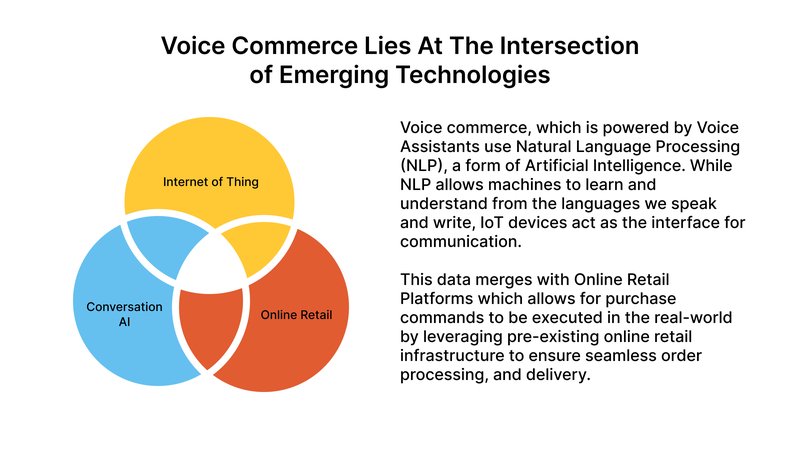
A new game-changer is on the stage. This year, you may hear more about voice-activated shopping since its popularity is growing dramatically. As voice assistants become more ubiquitous in homes and businesses, eCommerce platforms will likely integrate with these systems, allowing customers to make purchases simply by speaking a command. This technology will rely on natural language processing and machine learning algorithms to accurately interpret the customer’s voice commands and provide appropriate responses.
Blockchain
Security comes first. This motto is promoted by governments and their various data protection acts by setting up strict requirements and super-high penalties for breaching. Blockchain technology is capable of helping businesses handle terabytes of sensitive data collected and ensuring their security. The same goes for online transactions, since the technology prevents fraud and disputes. Blockchain technology may be used to develop decentralized marketplaces where buyers and sellers can make deals with each other directly without the need for intermediaries.
AR/VR
We recently came across an AR-powered pop-up shop called Serendipity on the Beach, a great example of how immersive technology can drive eCommerce sales. The TikTok video showcasing it quickly went viral, proving just how engaging this format can be.
Next year, we expect more eCommerce platforms using AR and VR technologies to create immersive customer shopping experiences. AR and VR allow customers to try on clothes virtually, visualize how furniture would look in their home, or see how a product works in real-time.

Source: BoF
How to develop eCommerce software from scratch: Must-have steps
The world of eCommerce is booming, and the demand for online shopping continues to grow. Building your eCommerce software from scratch can be an excellent solution if you’re thinking about boosting your online business.
However, building a new product can be daunting and challenging, especially when new technologies and trends are rapidly emerging. We collected several must-have steps you can follow to make the task easier and build the robust eCommerce software of your choice at a fraction of the cost and time.
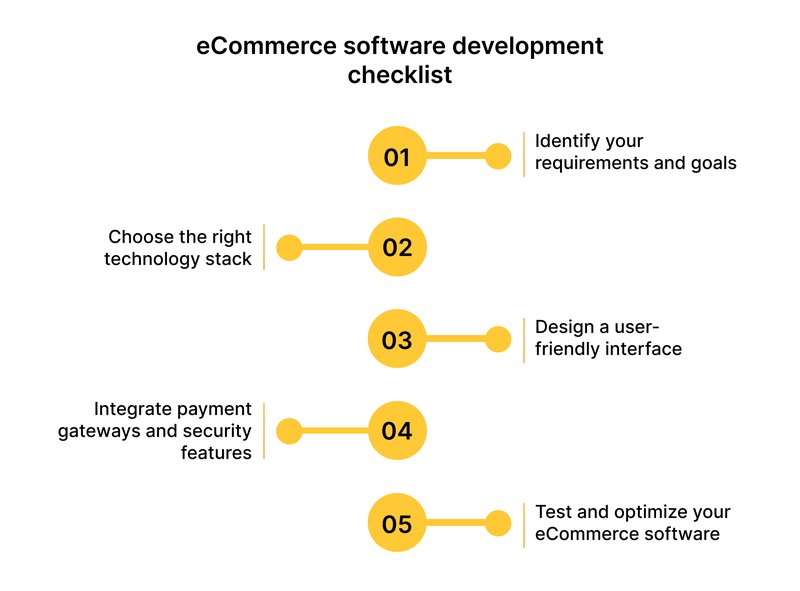
Identify your requirements and goals
Before developing your eCommerce software, you need to identify your requirements and goals. What software should it be? A payment system, a backend platform, or CMS? It’s crucial because, in some cases, you can easily buy ready-to-use solutions and solve your business issues.
Choose the right technology stack
An appropriate tech stack is half of software project success. Opt for technologies that can handle the increasing demands of online shopping. You should consider factors such as:
- scalability
- security
- performance
- cost-effectiveness
Popular eCommerce technology stacks include React.js, Angular, Vue.js, Node.js, Ruby on Rails, and PHP.
Design a user-friendly interface
The storefront is a starting point of the customer journey, so your business performance and revenuedirectly depend on the frontend you build. To remain competitive, you need to design a user-friendly interface to deliver a seamless and enjoyable shopping experience. Your interface should be responsive, intuitive, and visually appealing. You should also consider incorporating features such as chatbots or AI-powered virtual assistants, voice search, and personalized recommendations.
Integrate payment gateways and security features
Integrating payment gateways and security features is crucial for any eCommerce software. You need to ensure that your payment gateways are secure and reliable. Incorporate security features such as SSL certificates, two-factor authentication, and encryption to protect your customers’ sensitive information and comply with legislation.
Test and optimize your eCommerce software
Last but not least – testing. You need to check up on the prototype created to make sure the solution meets your requirements and goals. Collect the feedback, and keep mistakes in mind to optimize the product and boost its performance. You can use tools such as Google Analytics to track user behavior and identify areas for improvement.
Conclusion
The next chapter of eCommerce belongs to those who act early and put some effort into getting noticed. Shoppers expect personalization, speed, and security, and the software behind your store needs to deliver all three.
From AI and machine learning to blockchain and augmented reality, the tools to create these experiences are already available. Globaldev develops tailored eCommerce and AI-driven solutions to help businesses stay ahead, scale faster, and provide the experiences that modern customers love.