Here we’ll share the list of top domains that need AI as air and use its benefits and capabilities for business growth. Scroll down to explore the reasons and see why this technology is worth your investment this year.
What is artificial intelligence? About the technology in plain language
Since the 1950s, AI has remained a rather vague term. Thanks to Hollywood, it is associated in popular minds with many things – from Terminator, C-3PO, Sonny, and other robots to omnipotent cybernetworks like the Matrix.
“Artificial intelligence” is applied to describe any human-like activity performed by a program or machine to accomplish some task. Some of them we credit with a certain independence of decision-making and action – like strategic computer games, autonomously operating cars, or military simulations.
However, whatever guise is assumed by these silent intelligent assistants, their ability to plan, learn, make conclusions, solve problems, move, perceive, and manipulate objects in real-time makes them indispensable in various domains.
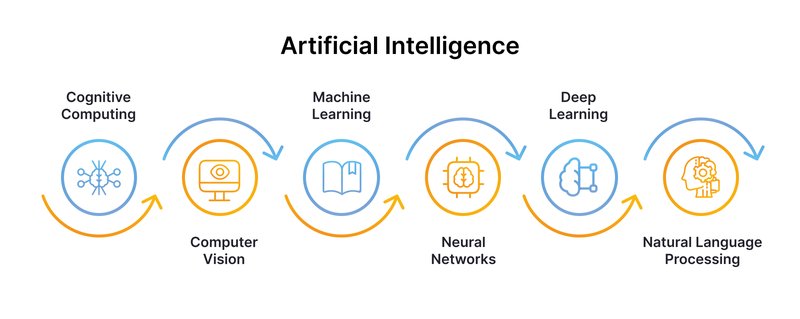
What business benefits do companies get from using AI?
The value of AI in business is already being proven in practice. Companies use it to cut routine work, improve accuracy, and make better decisions faster, freeing people’s time for tasks that actually require either human judgment or creativity.
1. Eliminating human factor
As social beings, we prefer to interact with people rather than machines. However, human involvement often introduces the risk of error, delay, or inconsistency.
Machines and systems powered by artificial intelligence minimize these weaknesses. Guided by clear algorithms and data, they deliver precision and reliability that are hard for humans to maintain all the time.
2. Round-the-clock availability
People can’t work without breaks. They’re necessary to refresh and recharge our “batteries” for a new activity. AI doesn’t need any rest and can work 24/7, doing its job incessantly and tirelessly.
Some processes require this ceaseless vigilance that humans can’t provide, like support systems and continuous production cycles.
3. Reducing manual work
Work rut is one of the main sources of talent burnout and poor employee experience. AI can work productively no matter how often it repeats the same operation. So, such mundane jobs as verifying bank documents, sending thank-you emails, and so on can be delegated to AI to handle.
4. Prompt decision-making
Humans tend to be deliberate and weigh many factors carefully before opting for a course of action, which can take a good chunk of time.
AI, however, is calculative and free of doubt, exasperation, or doldrums. It can analyze vast amounts of data to base decisions on. This can be a huge benefit as well as a drawback, depending on the area you entrust to it.
5. Functioning in hazardous conditions
Robots powered by AI can work in places where humans can’t venture – deep underwater and ground, into disaster zones, or areas with extreme radiation. Such robots are also of great help in assignments fraught with risks for human health or life, like defusing a bomb or lifting heavy weights.
Realizing the numerous assets artificial intelligence brings, large companies and individual entrepreneurs invest in AI-related projects for substantial sums. Juggernauts like Alphabet, Amazon, Microsoft, and Meta plan to invest a combined $320 billion in AI technologies and infrastructure in 2025. And venture capitalists, as of October 2025, already poured $192.7 billion into AI startups, setting a record.
What industries use artificial intelligence to gain a competitive advantage
Artificial intelligence has become a strategic advantage across nearly every sector. Below are the industries where AI is making the biggest impact.
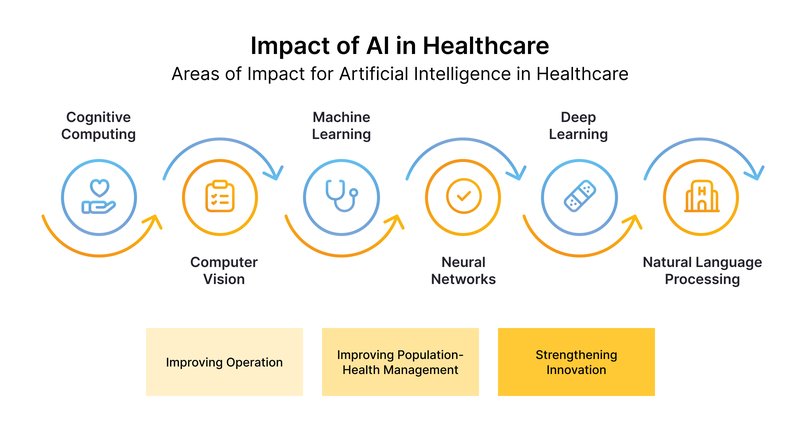
1. Healthcare
When it comes to AI in healthcare, our imagination may conjure up an image of a robotic surgery arm performing high-precision operations, after which patients can leave the hospital within a few hours. Yes, AI also partakes in this process, but its scope of employment is far greater. Companies like Cambio Health Care, Coala, and Aifloo, develop innovative software that can track people’s physical and mental condition, helping to spot the symptoms of cardiac diseases and strokes or keep a close eye on patients in nursing homes and hospices.
Artificial intelligence is also instrumental in diagnosing illnesses. Image recognition tools help physicians detect conditions faster and more accurately, even remotely. Moreover, some custom healthcare apps can act as a doctor, inquiring about a person’s symptoms, and providing an instant free consultation on what should be done.
About 75% of U.S. health systems now run at least one AI application, up from 59% a year earlier, and physician usage jumped from 38% in 2023 to 66% in 2024. The global AI-in-healthcare market reached roughly $39–52 billion in 2025/2026 (estimates vary by scope) and is forecast to approach $110–$614 billion by the early-to-mid 2030s depending on methodology.
Clinically, AI-assisted diagnostics are now credited with meaningfully lower error rates, and the FDA has cleared more than 1,300 AI-enabled medical devices, about 76% of them in radiology. Reported ROI averages roughly $3.20 returned per $1 invested, with payback in 12–18 months — concentrated mainly in documentation, billing, and scheduling rather than diagnostics or care management. (Sources: About Chromebooks, "AI in Healthcare Adoption Statistics 2026"; SQ Magazine, "AI in Healthcare Statistics 2026," updated Jun 2026.)
2. Education
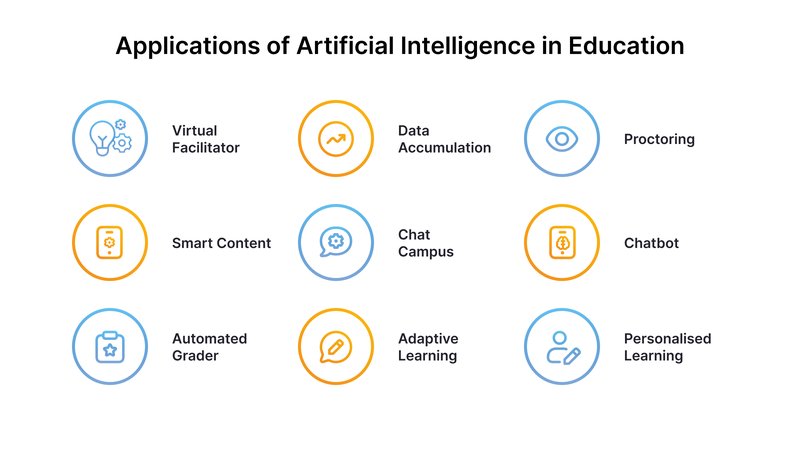
The pandemic was a powerful fuel for e-learning adoption. Developers started to create educational apps where AI can map a personalized and efficient path for every learner to acquire knowledge in different domains. And we aren’t talking about classical math or science only. With the addition of augmented and virtual reality technologies, students can experience complex topics interactively.
While artificial intelligence is an excellent help in conventional classrooms, it is indispensable for supporting learners with disabilities. AI-enabled tactile robots and adaptive learning systems help students grasp subjects and improve social skills, bringing inclusion into the classroom.
By 2026, AI use in education has gone from novelty to near-universal: independent surveys put student usage at 84–86% and teacher usage at roughly 83%, with teachers who use AI tools weekly saving an average of 5.9 hours per week. The global AI-in-education market is estimated at roughly $7–$23 billion in 2026, with long-range forecasts ranging from about $32 billion (2030) to $137–$292 billion (2035) depending on scope and methodology — reflecting how differently research firms define the category rather than a single consensus figure.
Gartner projects 80% of university courses will include AI-powered elements by 2028.
3. Marketing
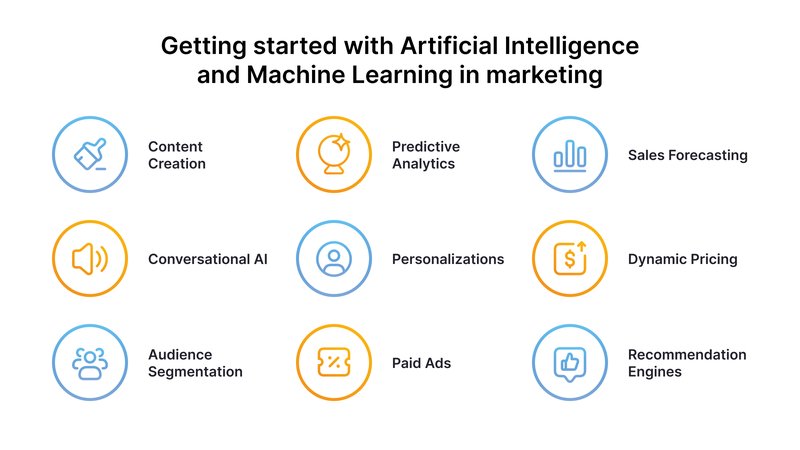
Marketing is one of the fastest adopters of AI, which can streamline numerous business processes. For example, Responsive Search Ads by Google help to calculate various marketing parameters, including conversion and click-through rates. Other tools are used to optimize:
- the ordering procedure
- customer support
- data analytics
- refund practices
- other elements of the sales workflow
Artificial intelligence allows enterprise marketers to manage thousands of campaigns in real-time without developers’ participation. The technology tailors offers to each customer to make them client-oriented.
Generative AI adoption in marketing is now effectively universal: 87% of marketers use it in at least one workflow in 2026, up from 51% in 2024. Content drafting delivers an average 3.2x ROI and personalization engines 2.7x, and the average marketer now recovers 6.1 hours per week — with enterprise teams reporting a blended 3.4x AI ROI versus 2.3x for SMB teams.
4. Banking & finance
This sector is notorious for its vast amounts of paperwork and documentation. AI is leveraged to reduce them to a necessary minimum, transferring most of them into digital format. Software tools are also applied in banking and finance for data arrangement and subsequent analysis.
For instance, a chatbot by Kami sifts through chat conversations to determine each customer’s tastes and preferences. Thus, financial companies can provide more targeted consultation services and plan their future steps based on AI-obtained insights.
Fraud detection has become the sector's leading AI use case: 90% of financial institutions now use AI to combat emerging fraud, and Gartner reports 55% of banking CIOs had implemented generative AI by the end of 2025, with another 26% expecting to within 12 months.
The generative-AI-in-banking market alone is projected to grow from about $1.4–$1.8 billion in 2025/2026 to $4.09 billion by 2030 (CAGR ~23.7%), while the broader AI-in-fraud-management market is estimated at $18.48 billion in 2026, roughly doubling by 2030.
On the risk side, Deloitte estimates generative-AI-enabled fraud could cost banks and customers up to $40 billion by 2027, which is part of why banks are investing in AI-driven fraud detection at the same pace as they're investing in AI-driven services.
5. Agriculture
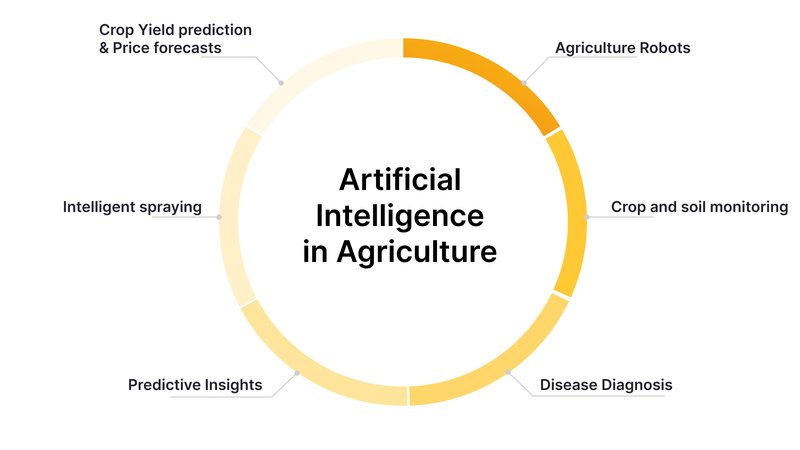
The application of AI in agriculture can be challenging, since it has to consider many hard-to-predict factors related to weather conditions. However, current achievements in this domain are astounding. FramDroid produced an AI-powered seeder that places each seed at the right depth, ensuring access to moisture for enhanced emergence of plants. The robot minimizes an excess of seeds, allowing plants to thrive without fighting for nutrients, sunlight, and water. Other companies feature similar innovative machines whose AI enables them to plant, fertilize, cultivate, and harvest crops and monitor soil moisture levels to determine the necessity of watering them.
Artificial intelligence is leveraged to elevate agriculture to a new level by employing pre-programmed drones that can not only watch the fields form on high and detect possible problems but also spray weedicide or fungicide or even mechanically remove moisture from ripe cherries after a heavy rain to prevent them from bursting.
Agriculture remains one of the slower-adopting sectors overall (28% organizational adoption in one 2026 cross-industry survey, the lowest of any sector measured) but precision farming specifically is growing fast: estimates put the precision-farming market at roughly $1.1–$16.8 billion in 2026 depending on scope, with a consistent trajectory toward $2–$39 billion by the early 2030s.
Adoption skews heavily by farm size — 81% of large farms (over 5,000 acres) are willing to adopt AI tools versus 36% of small farms (under 2,000 acres) — and agtech companies raised roughly $7 billion in 2025, with precision-agriculture deals outpacing crop-input deals in count. Farmers using AI-driven platforms report yield improvements in the 15–25% range.
6. Transportation
The world is abuzz talking about self-driving cars, and the first pioneer models have already been tested. Some companies (like Waymo) have even introduced a public ride-hailing service employing autonomous vehicles. AI in them collects all data from the radar, GPS, cameras, and cloud facilities, which are analyzed to give orders to the control system, setting the vehicle into motion and navigating it in the traffic.
This is no longer an early pilot. As of mid-2026, Waymo operates in 11 US metro areas, covering more than 1,400 square miles with roughly 3,000 vehicles, delivering around 500,000 paid public rides and 4 million autonomous miles per week — and is targeting 1 million weekly paid trips by the end of 2026.
It has also begun testing in New York City, Tokyo, and London, and offers freeway routes in select markets. Globally, Baidu's Apollo Go is now the largest robotaxi operator by volume, having peaked above 350,000 weekly driverless rides across 27+ cities in March 2026, narrowly ahead of Waymo.
7. Gaming
Today’s entertainment industry relies heavily on AI, and gaming is no exception. A modern computer or mobile game is workmanlike software that provides total immersion and creates complex simulations.
Beyond entertainment, such games are not only considered for amusement purposes, but are widely applied for professional goals. For instance, Arctic Shores produces custom games leveraged by blue-chip organizations like Xerox and Citi to evaluate their prospective employees.
8. Cybersecurity
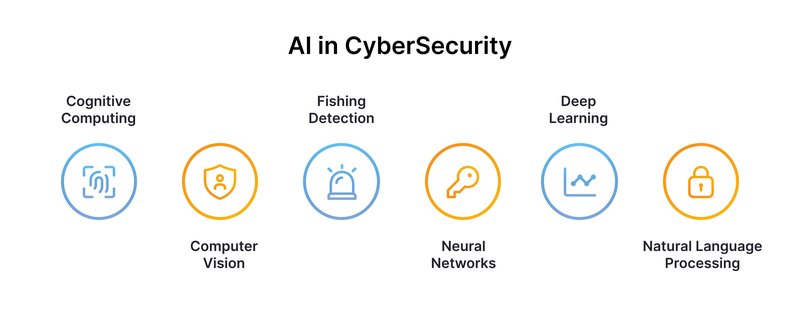
With more data stored digitally, cyber threats grow more complex. AI is employed to protect the huge existing databases against viruses or penetration attempts by wrongdoers who want access to valuable or sensitive information.
The most advanced AI security systems monitor the network permanently to identify any suspicious activity, nip possible security breaches in the bud, or alert humans who will patch the security hole themselves.
The stakes on both sides of this fight have risen. Market estimates for AI in cybersecurity for 2026 range from about $25.5 billion to $44.2 billion, with forecasts converging on roughly $50–$213 billion by the early 2030s depending on scope.
On the defense side, IBM reports that AI and automation cut breach response time by 80 days, and organizations using AI-driven behavioral detection cut average detection time from 181 days (signature-based) to 51 days.
On the offense side, AI-driven credential theft rose 160% in 2026, and banking-sector cyberattacks are reportedly up 280%, underscoring that AI is accelerating both attackers and defenders simultaneously.
9. Space explorations
Scientists here deal with vast quantities of data that can be processed and analyzed more effectively with AI. However, artificial intelligence can be even better applied in space exploration.
While our reach remains too short for sending human expeditions to other planets, AI-powered autonomous machines have to do most of the work, serving as our eyes, ears, and hands where humans don’t dare to set foot so far.
10. Lifestyle
AI has also become part of our everyday life. Virtual assistants and smart homes can help us handle aspects of cooking, cleaning, shopping, and so on.
In addition, the growing sophistication of image recognition and IoT integration means our living spaces are becoming smarter, more responsive, and more efficient, making convenience a new standard of living.
How adoption compares across sectors in 2026
Adoption speed varies enormously by industry. One 2026 cross-industry survey of 4,200 organizations found technology/SaaS leading at 92% organizational adoption, with agriculture trailing at just 28% — a reminder that the industries covered above are moving at very different speeds even as AI investment overall breaks records.
Closing thoughts
From sorting invoices to identifying fraud to assisting physicians in reading scans more quickly, artificial intelligence has merged itself into everyday business functions. It aids people where accuracy and consistency are of utmost importance. When AI takes over the mundane and people concentrate on the strategic and creative, that's when the true shift occurs.
If the numbers above make one thing clear, it's that the gap between AI leaders and laggards is widening by sector, not narrowing. The organizations pulling ahead in 2026 aren't necessarily the ones with the biggest AI budgets — they're the ones that picked a specific, high-value use case in their industry and scaled it deliberately, rather than adopting AI everywhere at once.