What is Flutter for business leaders and tech specialists?

Despite Flutter’s comparatively long availability in the market, it only speaks to some business leaders and developers. But here, you can change it and dive into the peculiarities of this solution. Read on to discover more about Flutter development and explore whether it is worth continuing your digital transformation with it.
What is Flutter: Framework? Language? SDK?
Flutter is an open-source software development kit for mobile apps that makes creating quality multi-platform applications accessible for everyone. It allows building cross-platform applications with a user-friendly design that delivers smooth digital experiences.
Flutter app development became a solution for many well-known brands, such as Philips, eBay, BMW, Toyota, etc. The case is that it’s oriented on a fast development process, which significantly cuts the timeline and speeds up time-to-market. Google tried hard to provide various libraries, tools, and an extensive knowledge base to support a rapid application development process.
What is Flutter used for? The real value of SDK
The ability to write multi-platform applications at a sky-high speed makes Flutter a versatile tool suitable for various industries, from automotive to media. Companies build apps or modernize existing solutions with Flutter to:
- Make the development process flexible
- Deliver a smooth UI
- Cover all platforms of their choice with one tool set
- Benefit from native-like performance
“Google’s ongoing investment makes Flutter one of the safest choices for app development. You can be confident it will still be around in the coming years, meaning today’s efforts will continue to pay off well into the future.” — Mobile developer, Globaldev Group
What are the top benefits that will convince you to choose Flutter?
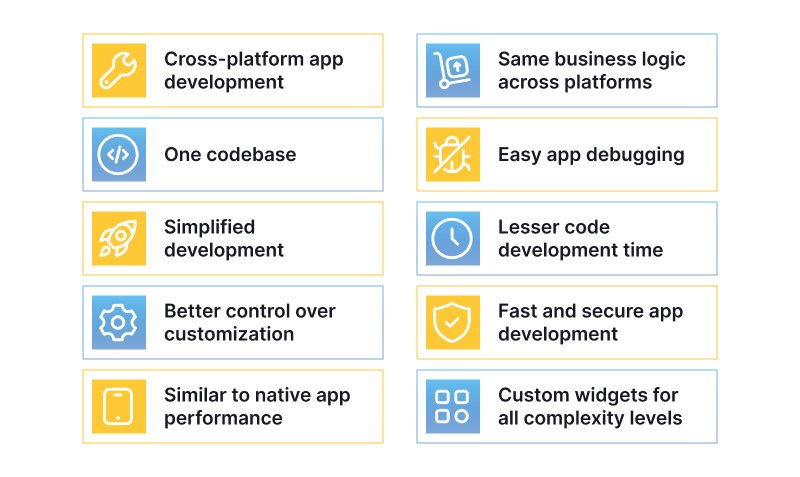
Flutter allows businesses to keep up with the times, considering the growing demand for adaptability and fast creation of efficient applications that audiences will like. For developers, it provides a friendly environment, a clear codebase, and various tools that eliminate routine processes and help focus on business logic.
The kit seems special because of several unique features it delivers to developers, such as:
- “Hot reload” or the ability to change an application without restarting it
- Multi-platform nature, helping to create native-like apps for Mobile, Web, and Desktop
- Support for custom embedders, allowing you to make Flutter work on the platforms of your choice
- Flexible UI built based on Google Material Design guidelines and Cupertino (iOS-style) widgets
- A broad widget library, helping create complex and fully customizable widgets
- Open-source that allows developing highly-performant apps for free
What is a starting point to master Flutter?
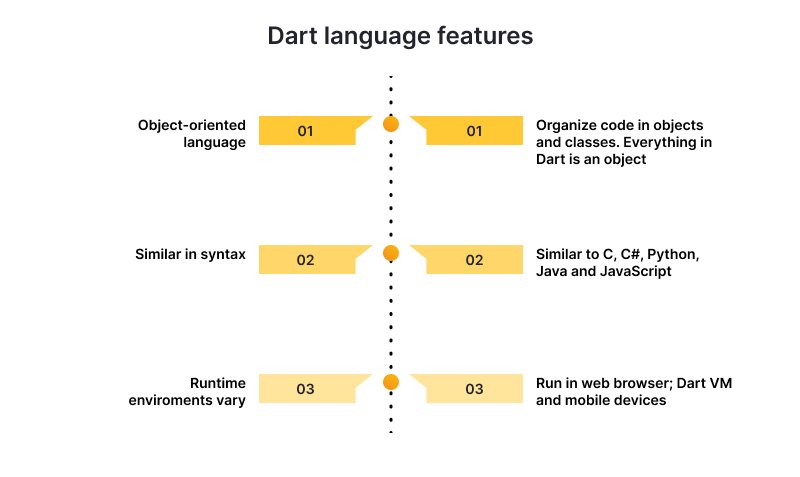
Which language is used in the Flutter framework? If its official website is a source of truth, it’s Dart. Dart is a language that was created as an alternative to JS and is precisely oriented toward fast app development. It’s like an intelligent system that offers you a suitable language for your development, considering its technical envelope. This approach considers the strengths and capabilities of languages.
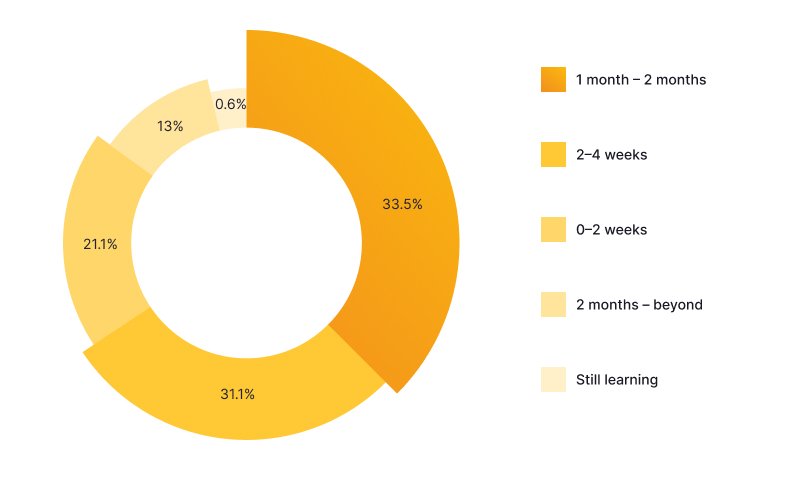
One time, the FlutterDev community suggested taking part in its survey on Reddit. Over 150 developers shared their experience on:
- What programming languages helped them master Flutter
- How long the learning curve was
- What learning resources they used to start building with Flutter
Over 85% of respondents said that it took up to 2 months to learn Flutter from A to Z and start working with this SDK at full capacity. This learning curve is impressive, since Flutter is clear enough to cut training time and focus on development.
“In my case, it took one day to master Dart and 1.5 weeks to dive into the Flutter documentation. When considering junior-level specialists, it takes about 1.5 months to start coding with Flutter accurately. If we’re talking about newcomers in software development, the mastering will take from 3 to 8 months, as a learning of any other similar technology. The learning curve depends on the experience.” — Mobile developer, Globaldev Group
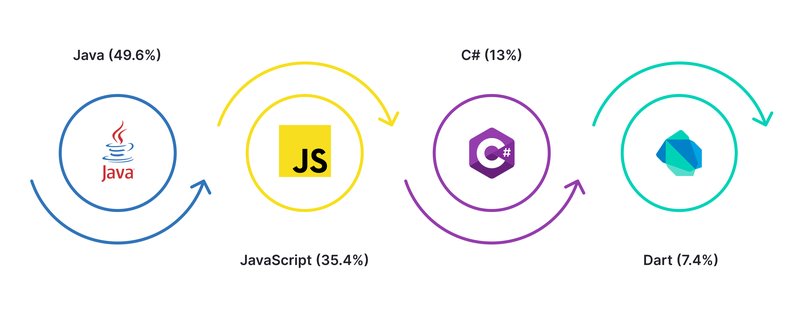
What’s interesting is that among the three top languages that helped people master Flutter and perform Flutter app development further were Java (49.6%), JavaScript (35.4%), and C# (13%). Meanwhile, Dart knowledge supported only 7.4% of developers in this journey. The most efficient sources for learning are YouTube and Udemy videos, as well as Stack Overflow.
Conclusion
Flutter proves itself as a practical, future-ready toolkit that helps businesses build apps faster, scale across platforms, and deliver exceptional user experiences. But choosing the right framework is only half the story. To truly benefit from Flutter, you need the right people and the right approach.
Whether you need to extend your in-house team with skilled Flutter developers or build a custom solution from the ground up, Globaldev can help you accelerate development without compromising quality.
Explore our team extension services to strengthen your capabilities, or check out our software engineering expertise to see how we deliver end-to-end solutions that make technology work for business.