Hotel booking app market: Overview
The online booking industry has significantly evolved after the pandemic and continues demonstrating strong long-term growth fueled by mobile adoption, AI personalization, and experience-driven travel services.
According to recent travel market analytics:
- Global online travel booking revenue exceeded $800+ billion in 2025
- Mobile bookings now represent over 70% of travel reservations
- AI-driven recommendations increase booking conversion rates by up to 30%
Two leading hotel booking apps, Booking.com and Expedia, have generated $21.4 and $12.8 billion in 2024 — a much better performance than the previous year:
These figures demonstrate continued strong demand for travel technology platforms and confirm hotel booking app development remains a profitable investment.
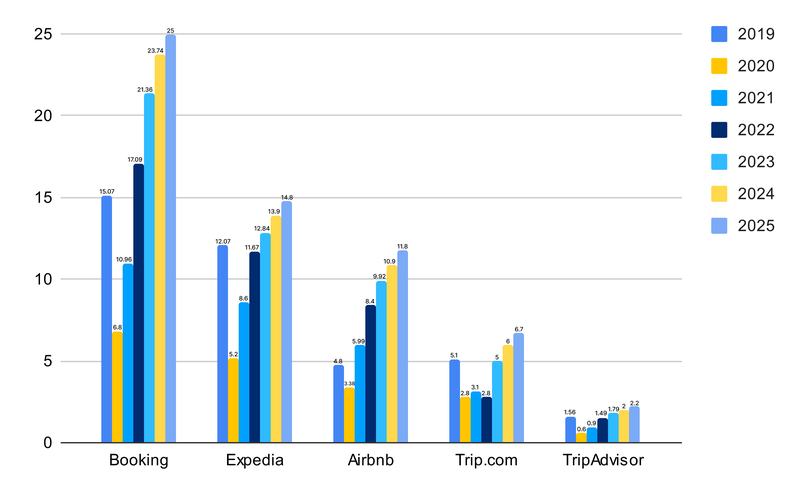
The other famous market players, including Airbnb and TripAdvisor, were also able to increase their profits. This means one thing: travel is back and may be on track to a full recovery.
These figures demonstrate continued strong demand for travel technology platforms and confirm hotel booking app development remains a profitable investment.
Now, in terms of the market share:
Booking.com, Expedia, and Airbnb are the absolute leaders among hotel booking apps, having about two-thirds of the market.
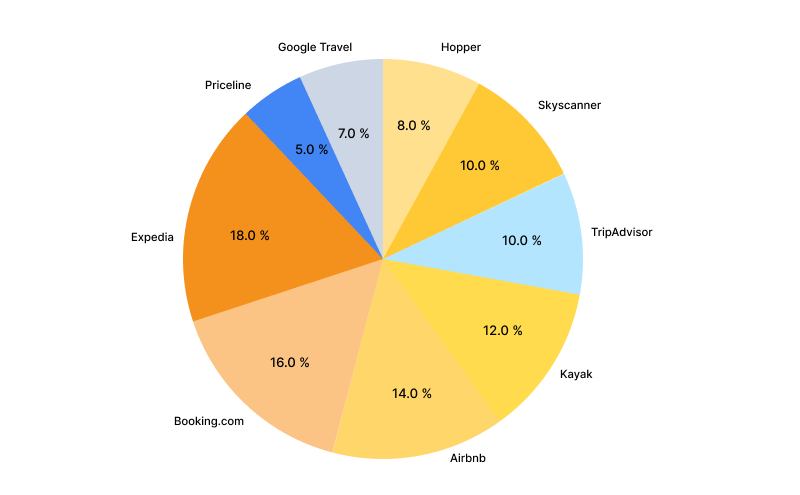
Source: softwarehouse.au
Let’s take a closer look at these two apps.
Here are a few stats on how they perform in the Google Play Store:
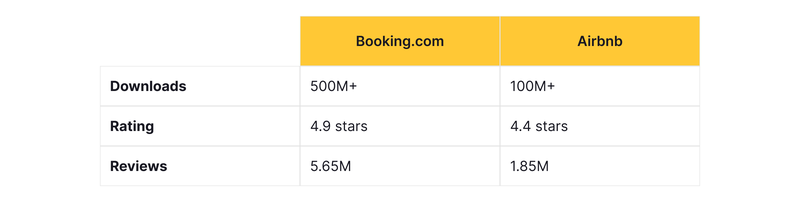
As you can see, the demand is there. Now, let’s see how Booking.com and Airbnb turn that demand into revenues.
How to monetize hotel booking apps?
The business model of any hotel booking app revolves around being a convenient place where anyone can plan and reserve accommodation during travel. In many cases, the apps also allow you to take care of travel (most commonly flights) and book some local attractions.
In other words, a hotel booking app is like a travel agency on a smartphone. And, pretty much like the agency, it can generate money in a few major ways.
Those revenue streams include:
- Commissions and transaction fees. Every fee for hotel bookings made through an app goes to revenue. This is the main revenue source for hotel apps
- Fees on related services. Hotel booking apps also earn from selling related services such as car sharing and taxi
- Referral and affiliate fees. You can sell hotel accommodation packages to travel agencies and other related companies
- Advertising within an app. Every square inch of screen space in a hotel booking app is a potential advertising space
- Subscription loyalty programs. Users pay a recurring monthly or annual fee to access exclusive discounts, room upgrades, early booking options, etc.
If you choose to develop a hotel booking app, the fees might be the only revenue stream for some time.
But that’s all right. As you grow and the app becomes popular, more people (travel agencies, car sharing services, etc.) will be more likely to partner with you, helping you unlock other revenue sources.
How much does Booking.com charge? On average, Booking.com typically charges around 10-25% commission, depending on region and accommodation type.
What types of hotel booking apps to choose
Before you build a hotel booking app, you need to choose which type you’d like to have.
Here are your choices:
- Hotel aggregator apps
- Hotel chain apps
- Last-minute hotel booking apps
Hotel aggregator apps
Those are the apps you’re probably familiar with (Booking.com is the best example of a hotel aggregator app). They act like middlemen between hotels and customers by generating listings of available offers according to the user’s filters.
This type of hotel app is the most popular because it makes hotel search straightforward for travelers. And there’s lots of ways in which you can develop this hotel app: for example, you can focus only on leisure travel, a certain type of hotel, or add extra features like car rental.
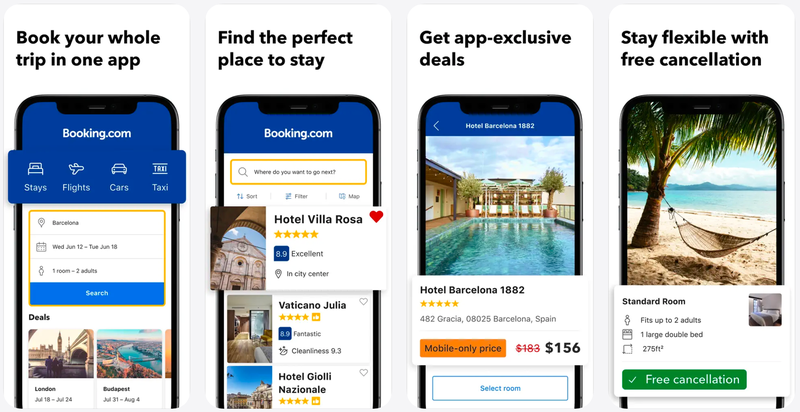
Source: App Store
Hotel chain apps
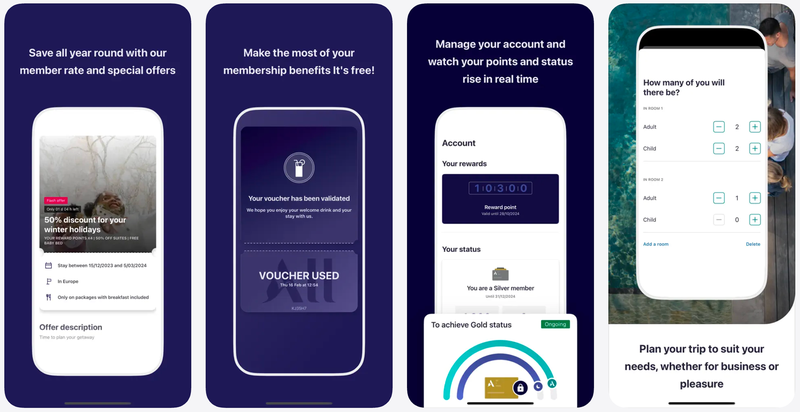
This app type allows you to book accommodation only within a certain chain of hotels. So, for example, with the Accor hotel group’s app, you can book a room in 5,500+ properties they own, including Novotel, Ibis, and Mercure brands (see the image below).
In this case, hotel chains and companies work closely with software companies on hotel mobile app development to ensure that the app meets their branding guidelines and the desired service level.
Source: App Store
Last-minute hotel booking apps
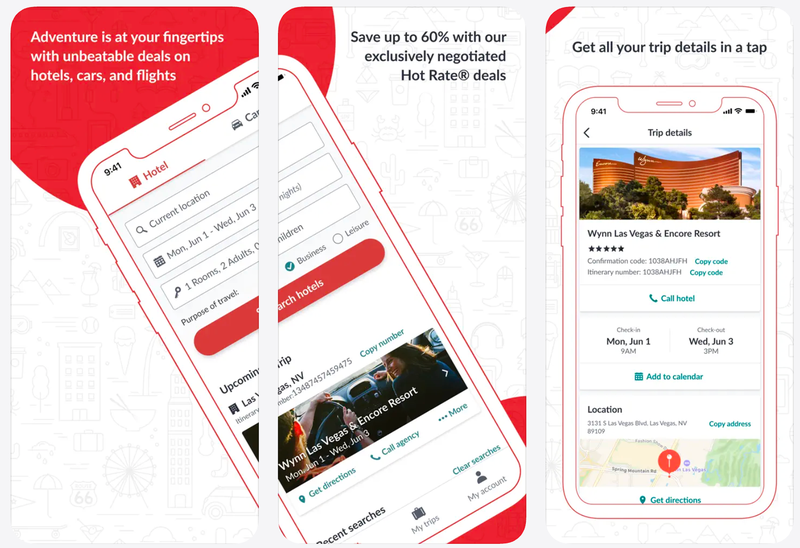
This app compares prices on last-minute travel vacation agencies and hotel booking websites (including Airbnb and Booking.com) to find hotels according to the user’s preferences. Many people prefer using such apps to find lower prices where they want to stay.
Besides price comparison, last-minute travel booking apps can also support direct booking, so there’s no need to go to a hotel’s website to get a deal. And, of course, they can also include deals on flights, taxis, and rental cars.
Hotwire is a good example of a last-minute hotel booking app (5+ million downloads across platforms):
Source: App Store
What are the essential features of hotel booking apps?
Regardless of the type of hotel app you’ll choose, there’s a set of basic must-have features. Those features are the building blocks of any hotel booking software development process and ensure a good user experience.
The core features of a hotel booking app are:
- User account & profile management
- Smart search with filters and AI recommendations
- Property listings with real-time availability
- Currency conversion & dynamic pricing
- Booking and reservation system
- In-app payments and digital receipts
- Chat with hotels
- Push notifications
- Saved properties and wish lists
- AI chatbot & customer support automation
- Loyalty and rewards programs
Emerging features shaping hotel booking apps in 2026:
- AI trip planning assistants
- Predictive pricing engines
- Voice booking support
- AR hotel previews
- ESG travel filters
What are the core features of hotel booking apps?
User account & profile management
For starters, every user must be able to create an account to be able to save their data, personalize search results, and use the perks of a loyalty program. To create an account, the app will need an email, password, address, and other data.
Also, you might want to consider allowing non-registered users to make booking as well. In some cases, people prefer to complete bookings quickly and sign up later.
Smart search with filters and AI recommendations
A hotel app is basically a small search engine, so this feature is pretty much non-negotiable. The users must be able to enter their search requirements (location, property type, dates, etc.), add some other useful filters, and get results based on them.
Modern apps take this a step further by using AI to suggest hotels based on user behavior, previous trips, and preferences. This not only improves user experience but also helps travelers discover options they might otherwise miss.
Property listings with real-time availability
Property listings are where travelers decide whether to book or keep searching. Each listing typically includes room details, photos, reviews, pricing, and location information.
Real-time availability ensures users see accurate booking options. This prevents overbooking and builds trust by showing reliable and up-to-date information.
Currency conversion & dynamic pricing
Travel is global, which means pricing needs to be flexible. Currency conversion automatically shows prices in the traveler’s preferred currency, reducing confusion and improving transparency.
Dynamic pricing helps hotels adjust rates based on demand, seasonality, and booking trends. For users, this means access to competitive pricing. For businesses, it helps maximize revenue.
Booking and reservation system
The heart of any hotel booking app, this feature allows to reserve and book a property to stay. There are multiple ways to implement booking, but the instant one is the most popular among those building a hotel booking app.
Unlike the traditional booking feature that involves the host approving or rejecting a booking request, the booking engine allows users to reserve hotel rooms instantly by selecting travel dates, room types, and guest preferences. A reliable reservation system ensures bookings are processed in real time and reduces the risk of manual errors, cancellations, or double bookings
In-app payments and digital receipts
Travelers expect fast and secure payments directly inside the app. Supporting multiple payment methods — including cards, digital wallets, and regional payment options — significantly improves conversion rates.
Digital receipts and automated confirmations provide users with instant booking proof while reducing the workload for customer support teams.
Chat with hotels
Even after a booking has been made, many people often have questions for hotel staff. Parking availability, vegan menu options, room upgrades, you name it—answering these questions is very important to make every stay as delightful as it can possibly be.
A built-in instant messaging feature is a common way to get that done. After booking (and in many cases before), the app makes it possible to get in touch with the chosen hotel’s reception desk. This feature helps improve customer satisfaction and creates a more personalized travel experience.
Push notifications
Push notifications keep travelers informed and engaged. They can remind users about check-in times, notify them about price changes, or highlight exclusive offers.
When used correctly, push notifications improve retention and encourage users to return to the platform.
Saved properties and wish lists
Many travelers like to compare hotels before making a final decision. Wish lists allow users to save favorite accommodations and revisit them later.
For booking platforms, this feature provides valuable insights into user interests and supports personalized marketing campaigns.
AI chatbot & customer support automation
AI chatbots help users get quick answers to common questions, assist with bookings, and provide travel support around the clock.
Automated support improves response time, reduces operational costs, and ensures users receive help even during peak travel periods.
You can choose which questions and answers to add during the hotel application development process. And, of course, you can add a possibility to redirect a user to a support agent in case the chatbot isn’t able to help.
Loyalty and rewards programs
Hotel apps make loyalty and rewards programs readily accessible to clients. A typical loyalty program will automatically keep track of points and rewards, propose when to take advantage of them, and, most importantly, reward repeat clients for their business.
These programs help booking platforms increase customer lifetime value while building long-term brand loyalty.
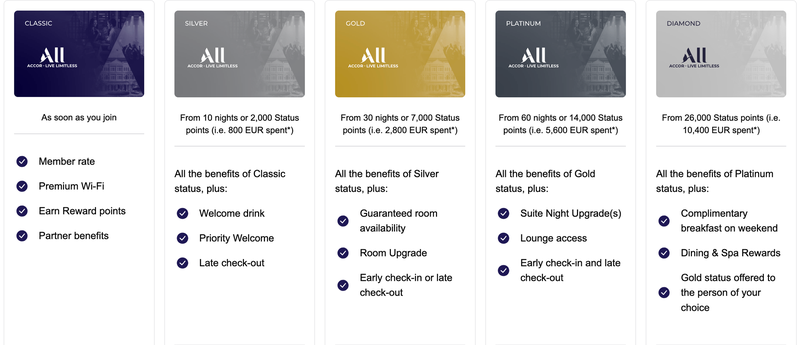
Example: here are the benefits and tiers of Accor’s loyalty program:
Source: all.accor.com
Emerging features shaping hotel booking apps in 2026
AI trip planning assistants
AI travel assistants are transforming booking apps into full travel companions. Instead of just booking hotels, users can receive complete itinerary suggestions, including activities, transportation, and dining recommendations.
This creates a more convenient travel planning experience and opens new revenue opportunities through bundled services.
Predictive pricing engines
Predictive pricing tools analyze historical booking data and market trends to forecast price changes. Travelers benefit by booking at the right time, while booking platforms improve demand forecasting and pricing strategies.
Voice booking support
Voice search and booking are becoming increasingly popular with mobile users and smart devices. Travelers can search hotels, make reservations, or check booking details using voice commands, making travel planning faster and more accessible.
AR hotel previews
Augmented reality allows users to explore hotel rooms, facilities, and nearby attractions before making a reservation. This immersive experience builds confidence and reduces uncertainty when choosing accommodation.
ESG travel filters
Sustainability is becoming a priority for many travelers. ESG filters allow users to find eco-friendly hotels, responsible tourism providers, and accommodations that follow sustainability standards.
This feature helps platforms align with modern travel values while supporting environmentally responsible tourism.
How to develop a hotel booking app: 7 essential steps
To help you understand what goes into a hotel reservation app development process, here are the most important steps to build a hotel booking app:
1. Choose a hotel booking app development company
Before the hotel mobile app development can begin, you need to choose a partner to take care of planning the human, technical, and business aspects of the project.
There’s a lot of hotel booking app development services out there, so here’s what you should keep in mind when choosing:
- Read reviews from clients. Consider checking ratings and reviews from independent platforms such as Clutch.co
- Check portfolios. Building a hotel booking platform requires some advanced expertise and a background in developing products of similar complexity. Check “portfolio” sections on the websites of companies you’re considering
- Choose a full-service company. This means that one company can cover every step of the hotel application development process, so you won’t have to look for any extra help from others
Once you’ve found some companies, get in touch with them.
Tell them your app idea, ask them if they have all the necessary expertise to complete such a project, and ask them for feedback.
2. Discovery (planning)
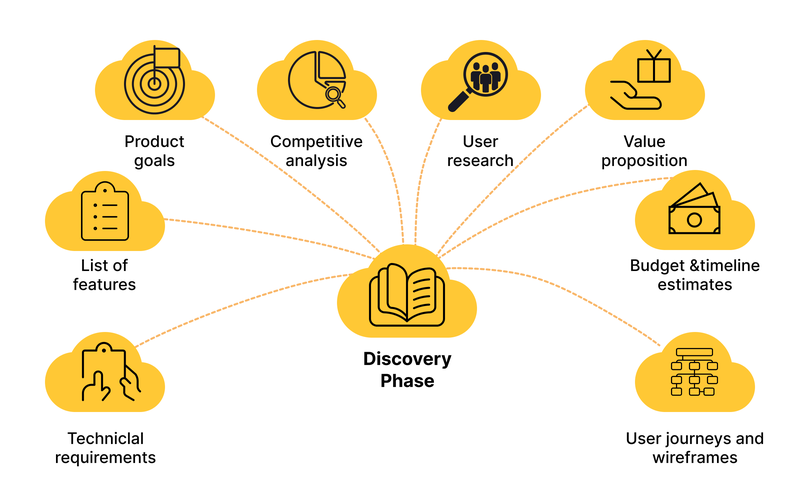
A discovery phase is the first essential step in the hotel booking app development (or any software development process, really).
That’s when you and your partner collect and analyze all the info necessary to understand the project goals, limitations, and target users’ needs:
Once all the info is collected and analyzed, a few documents are made:
- Systems Requirements Specification (SRS). This is an extended description of the hotel booking app development project that includes its goals, features, and technology required to complete the product.
- Minimum Viable Product (MVP) plan. A document that contains your and your partner’s estimates on budget, team size and composition, and the time required to build the first version of the product.
- Prototype. UI/UX designers make a working mockup of a product (basically clickable screens on a computer) to help understand how the final version will look and work.
3. UI/UX design
At this stage of hotel application development, your team of designers works on the appearance of the app. Now, they’re getting very specific and making a design that makes hotel booking simple and fast.
When they’re done, they share the designs with the quality assurance team, which tests them to detect any inconsistencies or bugs. The final and tested interface is the outcome of this stage, and it needs to get your approval to actually be made.
4. App development
Now, software developers can finally start “transforming” the designs into a hotel booking app that works. At Globaldev, we divide the development process into parts to deliver specific parts of the product one by one.
You as a client also stay in regular contact with the project manager and the development team to approve the developed features. In fact, you can attend daily meetings to be fully updated on the hotel booking app development process.
5. QA testing
The goal of this stage is to ensure that the final version of your hotel booking app works perfectly. The QA team steps in once again to find any bugs or other issues that could still be present.
Testers typically try these processes to find bugs:
- Observing how the app behaves during hours of usage
- Completing real use cases many times (e.g. booking a room)
- Testing the app on various devices and platforms
6. App deployment
Now, the accommodation booking software development and testing are done, so it’s time to release the app to your chosen app store. Typically, you need to do some marketing to raise awareness of the new product and encourage people to download and use it.
7. Maintenance
The work is not quite done once your booking app is released. Now, the goal is to make sure that your hotel booking app project is successful in the long-term.
There are a few reasons why maintenance is critical:
- Make sure the app is compatible with platform (Android, iOS) updates
- Fix any bugs or problems that could happen in the future
- Add new features to make the app more competitive
How much does it cost to develop a hotel booking app?
Developing a hotel app is a great business idea, but it requires some upfront costs. Depending on the complexity and the number of features, a hotel booking app can cost anywhere between $50,000 and $700,000 and even higher.
Here are some estimates to get a better idea:
- A simple hotel booking app, like for one small chain, can cost from $50,000
- A more complex app, such as a hotel aggregator, can cost from $100,000
- An Airbnb-like app can cost from $150,000-$350,000
- AI-enabled marketplace platform: $250,000 – $700,000+
Costs depend heavily on:
- AI feature integration
- Third-party service APIs
- Scalability requirements
- Multi-platform support
Let’s break down what goes into the hotel booking app development cost a bit more.
Below, you’ll find the four essential mobile app development processes and their approximate costs based on app complexity:
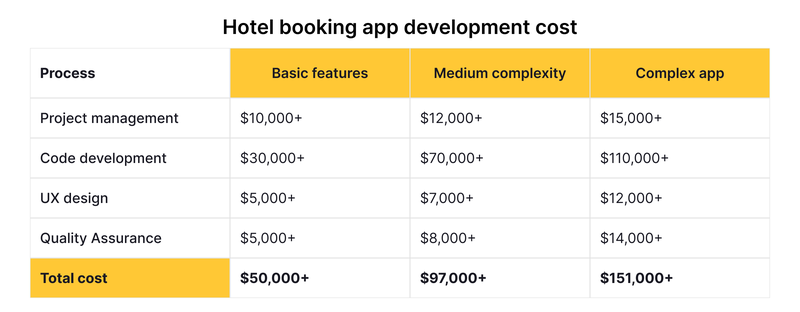
An important note: the cost of hotel mobile app development is not a one-time expense. After the app is up and running, you’ll need to maintain and update it, which also requires some resources.
Conclusion
Hopefully, this guide to hotel app development has helped you understand the key components and decisions involved in building a successful solution. As an experienced app development company, we understand how complex and business-critical these projects can be, which is why we aimed to provide clear, practical, and actionable insights throughout this guide.
If you’re looking for an accurate cost estimate from a development partner with 200+ successfully delivered projects — or simply want to discuss your hotel app idea — let’s talk.