This guide explains how agricultural apps are developed, what benefits they bring to farm operations, and how to choose the right partner to build one. You’ll also see what types of agricultural software are most common and what it typically costs to bring a project from idea to working solution.
What is agriculture app development?
Agriculture app development is a process of creating mobile apps and software tailored to address the needs of agricultural businesses. This process typically involves collaboration between two parties: an agriculture software development service (including the project management and the dedicated development team) and the client (an agricultural business).
Agriculture app development steps
There are a few steps involved in a typical process of developing software.
The process of any agriculture software development begins with the client describing their needs to the technology partner. Like with any other business project, the quality of collaboration and expertise plays a key role in ensuring the best possible outcome.
So, here are the steps:
- Collecting and analyzing product requirements. The client and the app development company collaborate to understand your specific needs and the challenges of the project. This stage involves detailed discussions, data collection, and problem identification to define the future app’s objectives and features.
- Design and planning. Once the agricultural app development company has a comprehensive understanding of the requirements, it proceeds to design the app’s architecture, user interface, and feature set. This involves creating wireframes and mockups of the future app (read more about the design phase).
- Software development. Software developers create the code for the app, transforming the design into a fully functional digital product. Apart from coding, this phase of agriculture app development also involves some testing and optimization of the app’s performance (read more about dedicated software development teams).
- Testing. Here, developers share their work with quality testers, who perform various types of software tests, including functional, performance, and security testing, to find any issues. Also, the client is often involved in testing to ensure that the app fully meets their needs.
- Deployment and support. The finished product is deployed to be ready for use. The app development company provides training if necessary to ensure that the client can effectively use the app. Additionally, they can also provide ongoing technical support and maintenance to address any questions, issues, or future software updates.
What are the types of agricultural apps and software?
Some of the most common types of agricultural software include farm management, livestock management, crop monitoring, and accounting.
Farm management systems
Farm management software serves as a centralized platform for farmers, streamlining their daily activities. It encompasses features for assessing profitability, expense tracking, crop production monitoring, livestock record-keeping, and more.
By integrating record-keeping, planning, management, tracking, sales, and reporting tools, this software simplifies the entire farm management process. This way, farmers can operate their businesses more efficiently.
Livestock management
Livestock management software is designed to assist farmers and livestock producers in efficiently managing their livestock operations. This software helps track and monitor the health, breeding, nutrition, and overall well-being of animals.
For example, poultry businesses can use livestock management software to get information such as daily egg yield, historical egg production, and production comparison in one dashboard. These visual representations offer a clear and concise overview of key metrics, facilitating efficient analysis and decision-making.
Crop monitoring
Crop monitoring software is a solution that helps track the health and condition of crops, both in real time and using historical data. This software combines the software part (a computer program) and hardware (sensors in the field).
Crop monitoring software can help protect crop health by detecting issues such as pest infestations, diseases, and water stress. It also records field data to generate economic analysis and real or projected profit evaluations.
Agricultural accounting
Agricultural accounting software is a specialized software designed to help farmers track and manage income, expenses, and inventory. This software simplifies tasks like budgeting, tax compliance, and financial analysis, providing insights into profitability.
Using such software helps maintain accurate inventory records, preventing overstocking or shortages, and optimizing resource allocation.
Irrigation and water budgeting
Irrigation scheduling software helps farmers decide when and how much to irrigate by combining soil data, crop growth stages, and local weather forecasts. These tools are especially valuable in regions with water restrictions or high pumping costs.
A well-known solution in this category is SWIIM (Sustainable Water & Innovative Irrigation Management). Growers may create crop-specific water budgets, track usage in real time using connected flow meters and sensors, and provide water districts with reports that are ready for compliance. Farmers who utilize SWIIM can minimize water use, decrease pumping energy costs, and in certain situations, even make money off of the water they save through leasing or lending programs.
Pest and disease detection apps
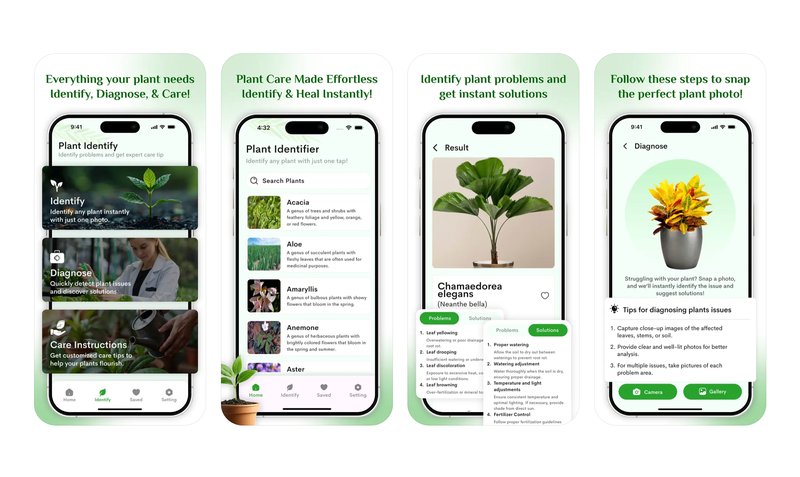
One of the most time-consuming farming chores is scouting for pests and diseases. These days, software that uses machine learning and picture recognition speeds up and improves the accuracy of this procedure.
With over 10 million downloads, Plantix is one of the most popular apps in this category. Farmers can simply take a picture of a “crop symptom” and upload it to the app, which will then identify possible pests, illnesses, nutrient deficits, and suggest necessary remedial measures. As Plantix already covers hundreds of crops and damage types, it can provide a lot of value and use for both smallholder and large-scale farms. These applications aid in yield protection and input optimization by lowering misdiagnosis and facilitating earlier interventions.
Source: App Store
Traceability and food safety platforms
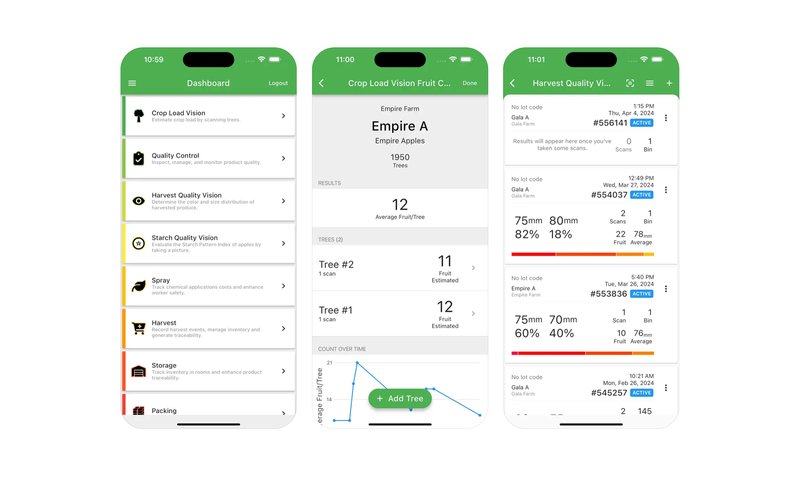
Traceability software is becoming indispensable for farms, especially those that make fresh produce, as markets and regulators want greater openness. By documenting each stage from harvest to shipping, these systems ensure that goods can be tracked back to their precise place of origin.
A program called Croptracker integrates shipment information, labor logs, and harvest records into a single traceability system. It produces results that speed up and simplify audits while lowering the possibility of identifying errors or noncompliance. Growers will benefit from quicker reactions in the event of a recall, as well as simpler access to high-end buyers who want evidence of food safety.
Source: App Store
Application development in agriculture: How to hire a reliable partner
Finding a reliable partner to develop quality software for your agricultural business will be easier if you follow these steps:
- Research. Look for experienced agriculture software developers on platforms like Clutch.co. You can find them through online searches, referrals, industry events, or agricultural technology forums.
- Assess their portfolio. Check out their case studies and experience, and note if they have a proven track record of developing quality software. If a company you like doesn’t list projects in the agricultural industry, that isn’t necessarily because they haven’t done those. Clients can sometimes prohibit software development agencies from sharing project details. Hence, it’s always best to clarify if they have the desired experience via an email or a LinkedIn DM.
- Check client reviews. Read online reviews on platforms like Clutch and Goodfirms (they do a good job at verifying reviews), and ask for references from past clients—they should give you helpful info about how the company works in reality, as well as share their level of satisfaction with the developed product.
- Evaluate the experience in your niche. Some software development agencies specialize in specific areas within agriculture, such as crop monitoring or grain and seed handling facility software.
- Get in touch. Most agriculture software development services provide free consultations, so you’ll be able to get answers to any questions you might still have. For example, you might be interested in specific technologies your potential partner uses.
How much does software development for agriculture cost?
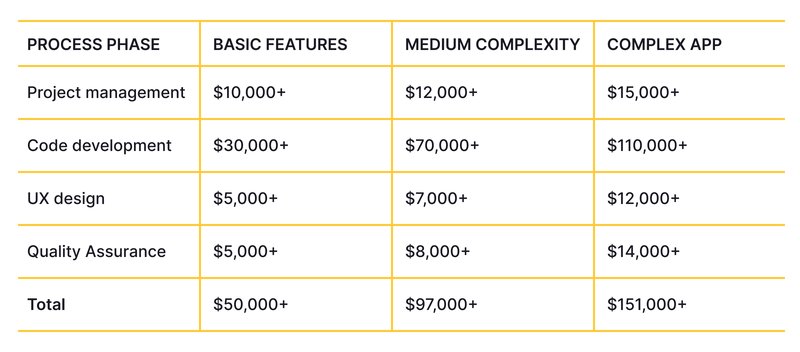
While the final cost depends on the project and requirements, developing a fully functional agricultural application may cost anywhere between $50,000 and $150,000.
Here’s what goes into the final amount, broken down by project phases:
Closing thoughts
Finding the necessary expertise to transform a concept into a functional solution is just as important as having the right idea when developing agricultural software. While some companies would rather increase their own capacity with skilled engineers, others want a comprehensive development partner to create and build end-to-end apps.
At Globaldev, we support both paths. If you’re looking for a dedicated team to build your project from the ground up, explore our engineering services. And if you want to strengthen your existing team with skilled specialists, our team extension services are designed to fit seamlessly into your workflow.